

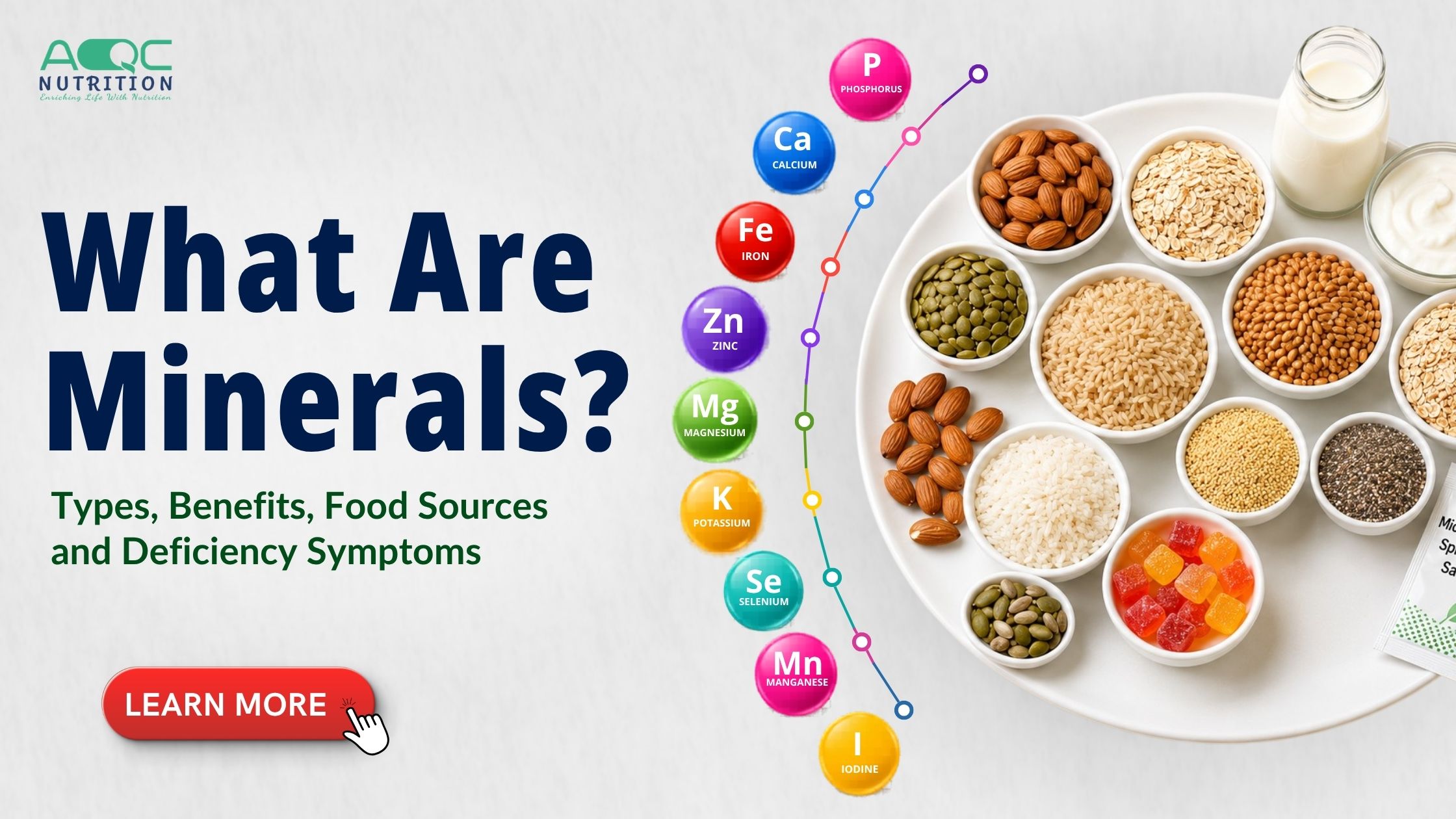
Minerals are essential nutrients that your body needs on a daily basis to stay active, well-balanced and healthy. Although they are needed in small amounts, they also play a very significant role in the proper maintenance of health.
They help in the development of strong bones and teeth, supporting heart and muscle function, as well as nerve functioning. Minerals also support energy production, fluid balance and a strong immune system.
Minerals are not made by the body, so they must be consumed through the foods we eat on a daily basis. A well balanced diet ensures that you do not find yourself deficient in a particular nutrient and helps promote good health and wellness.
What Are Minerals?
Minerals are essential nutrients that come from the soil and the food that we eat regularly. They play an important role in supporting the proper functioning of the body. Mineral do not provide energy, like carbohydrates, proteins, and fats, but they are still necessary for survival.
They are crucial for different body functions like nerve transmission, muscle contraction, hormone production and immune system functions. If your body doesn’t have efficient minerals, your body cannot function properly.
Two Main Types of Minerals
Minerals are mainly divided into two categories based on how much your body needs.
1. Macrominerals (Major Minerals)
These are needed in larger amounts (more than 100 mg per day).
- Calcium – Builds strong bones and teeth
- Magnesium – Supports more than 300 enzyme functions
- Phosphorus – Works with calcium for bone strength
- Potassium – Maintains fluid balance and heart function
- Sodium – Controls fluid levels and nerve signals
- Chloride – Maintains fluid and acid balance
- Sulfur – Helps form proteins and vitamins
2. Trace Minerals (Microminerals)
These are needed in smaller amounts but are equally important.
- Iron – Carries oxygen in the blood
- Zinc – Supports immunity and wound healing
- Iodine – Helps thyroid hormone production
- Selenium – Acts as an antioxidant
- Copper – Helps form red blood cells and collagen
- Manganese – Supports metabolism and bone formation
- Fluoride – Strengthens tooth enamel
Key Benefits of Minerals
- Bone and Teeth Strength
Calcium, phosphorus, and magnesium work together to build strong bones and teeth. A deficiency can lead to weak bones and conditions like osteoporosis. - Heart and Muscle Function
Potassium, sodium, magnesium, and calcium help regulate heartbeat and muscle movements. An imbalance can cause cramps or irregular heart rhythm. - Nerve Communication
Sodium and potassium help generate electrical signals that allow the brain to communicate with the rest of the body. - Immune System Support
Zinc and selenium strengthen the immune system. They help the body fight infections and reduce cell damage. - Energy and Metabolism
Iron helps carry oxygen in the blood. Low iron levels can cause fatigue, weakness, and low energy. - Hormonal Balance
Iodine supports thyroid function, which controls metabolism, growth, and energy levels.
Best Food Sources of Minerals
Getting mineral through natural food is the best way to stay healthy.
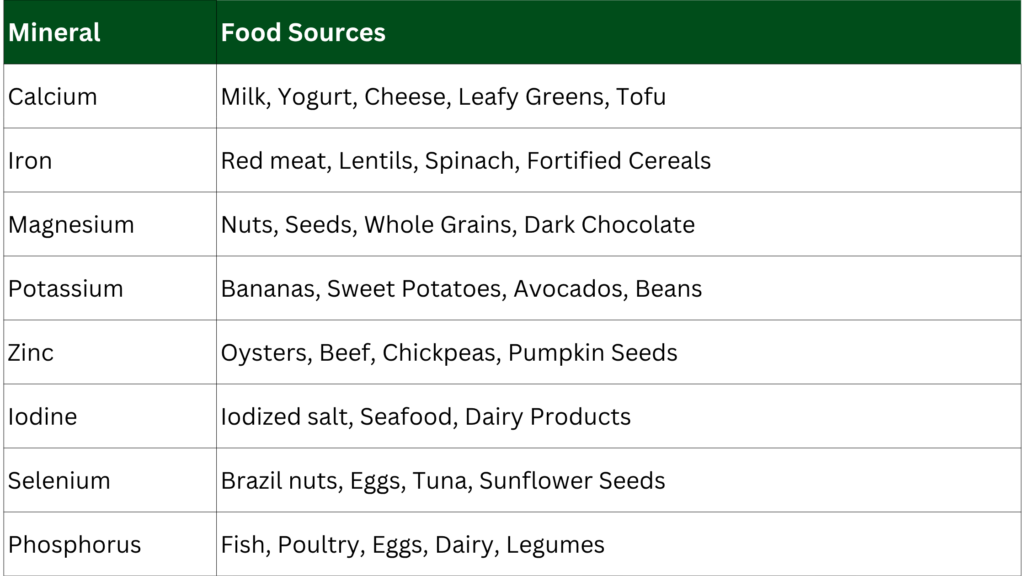
A varied and balanced diet helps prevent deficiencies naturally.
Common Deficiency Symptoms
When your body lacks mineral, it shows warning signs such as:
- Iron deficiency → Fatigue, pale skin, weakness
- Calcium deficiency → Weak bones, muscle cramps, dental issues
- Magnesium deficiency → Anxiety, poor sleep, muscle twitching
- Zinc deficiency → Hair loss, weak immunity, slow healing
- Iodine deficiency → Thyroid issues, weight gain, brain fog
- Potassium deficiency → Muscle weakness, fatigue, irregular heartbeat
If these symptoms appear together, it is important to consult a healthcare professional.
Final Thoughts
Minerals do not get as much attention when talking about nutrients, but are essential to survival. From your heart beating to your brain functioning almost every process is done through mineral in our body.
The daily needs of mineral are easily fulfilled by consuming a diet rich in vegetables, fruits and nuts, as well as whole foods. The most appropriate approach, if you suspect any deficiency, proper testing and medical advice are always the best approach.
Your health depends on the small things — in the end minerals are one of the most important.
Good nutrition starts with the right knowledge. Discover more expert health and food fortification content at AQC Chem Lab.
Our Website: www.aqcchem.com
Contact us: +91-99207 79504