Explore insights, innovations, and best practices in AQC Chem—covering advanced chemical solutions, quality control, and industry applications for sustainable growth.

Premix

The Power of Premixes: How a Simple Blend Fights Micronutrient Deficiency

Imagine eating enough food every day to feel full, yet still being desperately malnourished. This is the reality of widespread, chronic malnutrition, a condition affecting billions globally, characterized by a lack of essential vitamins and minerals—micronutrients—in the diet.

Micronutrients like vitamin A, iodine, iron, and folic acid are the tiny, unseen heroes responsible for everything from cognitive development and immune function to energy production. When the diet lacks these essentials, the body suffers silently. Deficiencies can lead to severe health consequences, including weakened immunity, poor growth in children, birth defects, and reduced productivity in adults.

So, how do we efficiently and affordably deliver these vital nutrients to the masses? The answer lies in a simple, scalable solution: micronutrient premixes.

What exactly is a Micronutrient Premix?

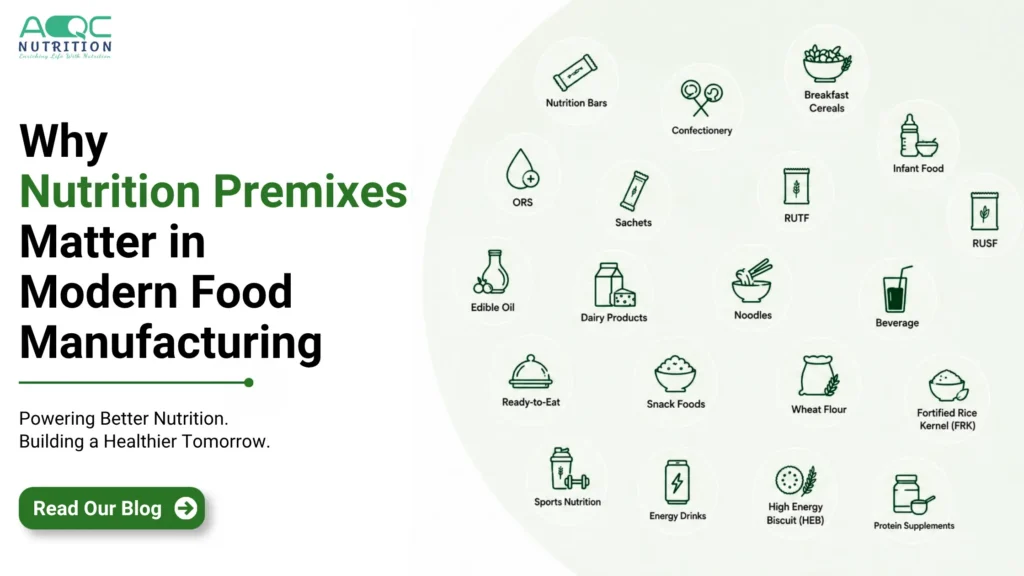
A micronutrient premix is a carefully formulated, stable blend of two or more essential vitamins and minerals. Think of it as a nutrient “cocktail” designed by food scientists and nutritionists.

These premixes are the foundational ingredient used in food fortification, which is the process of deliberately increasing the content of an essential micronutrient in a food to improve its nutritional quality and provide a public health benefit with minimal risk to health.

For example, a typical premix used for fortifying wheat flour might contain:

  • Iron: To fight anemia.
  • Folic Acid: To prevent neural tube defects.
  • B Vitamins (like B1, B2, and B12): To support energy metabolism.
  • Zinc: For immune support and growth.

The Secret to Success: Precision, Stability, and Scale

Premixes are highly effective in reducing deficiencies because they solve three major logistical challenges:

  1. Precision and Bioavailability
    Micronutrient deficiencies are effectively addressed only when the nutrients are correctly absorbed. Premixes are engineered to contain precise, measured amounts of nutrients that are bioavailable—meaning the body can easily absorb and utilize them to correct existing deficits. Scientists select specific, stable forms of compounds (like certain iron salts or vitamin forms) that won’t degrade during food processing or cooking and won’t negatively alter the taste or texture of the final food product, ensuring both efficacy and consumer acceptance.
  2. Stability and Uniformity
    To eliminate population-level deficiencies, every consumer must receive a reliable dose. Premixes guarantee the uniformity of nutrient distribution within large batches of food, ensuring that every serving—whether it’s a handful of rice, a slice of bread, or a spoonful of oil—delivers a consistent and reliable dose. Furthermore, the premix formulation protects the unstable vitamins and minerals from environmental factors like light, heat, and moisture, maintaining their full potency (stability) until consumption.
  3. Cost-Effective Scaling
    Widespread nutrient deficiency requires a universal solution. The power of premixes lies in their ability to achieve mass food fortification—the addition of nutrients to staple foods that billions already consume daily. Instead of relying on individuals to take supplements or change complex dietary habits, premixes seamlessly integrate the solution into existing food supply chains. This low-cost, high-reach strategy enables the swift and sustainable reduction of deficiencies across entire populations.

The fortified staple foods include:

  • Flour (Wheat, Maize): For bread, pasta, and pastries.
  • Rice: The primary staple for over half the world’s population.
  • Salt: Universal carrier for iodine.
  • Cooking Oil and Sugar: For vitamins like A and D

By integrating the solution into existing food supply chains, the cost is minimal—often just pennies per person per year—yet the public health benefit is enormous.

Proven Impact: A Quiet Revolution in Health

The Implementation of micronutrient premixes in Staple Foods has led to major public health victories worldwide:

  • Iodine Deficiency – South Asia, Africa & Latin America:
    Universal salt iodization programs, implemented widely across India, South Asia, Sub-Saharan Africa, and Latin America, have significantly reduced iodine deficiency disorders (IDD), contributing to improved cognitive development and thyroid health.
  • Folic Acid – North America, Latin America & Parts of Asia:
    Mandatory fortification of wheat flour with folic acid in regions such as North America (USA, Canada) and several Latin American countries, followed by adoption in parts of Asia, has led to a substantial decline in neural tube defects in newborns.
  • Iron Deficiency – South Asia, Africa & Southeast Asia:
    Iron fortification of staple foods like wheat flour, rice, and maize has been widely introduced across India, South Asia, Africa, and Southeast Asia, helping reduce iron-deficiency anemia, particularly among women, adolescents, and children—thereby improving energy levels, immunity, and productivity.

Micronutrient premixes are the quiet force behind a massive global shift toward better health, transforming basic food ingredients into powerful allies in the fight against chronic nutrient deficiencies.

AQC Chem remains committed to delivering high-quality, scientifically formulated premixes that support effective fortification initiatives and help reduce micronutrient deficiencies at scale.

What Is a Nutrient Premix? A Complete Guide for the Food Industry

Micronutrient deficiencies often go unnoticed for extended periods, as their
effects aren’t always immediately visible. Food fortification has become a
cost-effective process to overcome this problem.

The foundation of fortification is the nutrient premix, a carefully designed
combination of vitamins, minerals, amino acids, and other nutritional bioactives.
These blends are combined with various consumable items at the time of
manufacturing to boost their nutritional content.

These blends empower processed food manufacturers to offer products with
consistent texture, better quality, and assured safety while enhancing nutritional
content. The importance of nutrient blends can be understood by knowing their
composition, function, and usage in greater detail.

How Nutrient Blends Are Made

The formulation of a premix involves a carefully monitored process, backed by
science. The selection of the right nutrients and combining them in the right
proportion is vital to creating an effective combination. The choice of each
nutrient depends on multiple factors like shelf life, ability to blend well with other
nutrients, and suitability for the final product.

A scientific analysis of the final formulation, based on several parameters, ensures
that when the blend is added to a food product, it provides the required nutritive
effects while maintaining the food’s taste and quality when on the shelf.

Composition: Ingredients and Their Purpose

While formulations may differ depending on the product’s intended use, they
generally include:

  • Vitamins (A, B-complex, C, D, E, K)
  • Minerals (iron, zinc, iodine, calcium, magnesium)
  • Amino acids and other bioactives, such as omega-3 fatty acids or botanical extracts

Each nutrient in a blend has a specific function—iron helps in hemoglobin
production, vitamin D aids in calcium absorption, and vitamin A supports
eyesight and the immune system—making them a holistic, advanced nutritional
option.

Categorization

Nutrient blends come in different varieties, and they can be categorized
according to their application or target consumer:

  • Powdered blends, suitable for dry items like flour, grain blends, and bakery products
  • Liquid blends, which are ideal for beverages, dairy products, and oils
  • Blends for human use, added to fortified food items, medically recommended diets, and infant nutrition.

One Blend, Many Forms

Nutrient blends are suitable for large-scale industrial usage due to their
adaptability and versatility. The components of a nutrient blend can be modified
to suit different criteria, such as:

  • The physical properties of a food product (solid, semi-solid, or liquid)
  • The target audience (patients, children, women, athletes, etc.)
  • Regional/national laws and regulations
  • Features like aroma, taste, texture, and durability

By customizing the nutrient blends, manufacturers can come up with unique
combinations, diverse nutritional profiles, and fulfill both customer needs and
regulatory requirements.

Industrial Applications

Premixes are widely used in:

  • Fortified and enriched foods like flour and oils
  • Food for babies and young children
  • Products derived from different flours
  • Dairy-based foods and beverages
  • Diets advised by doctors

Blending Into a Better Future

These days, people often confuse calorie intake with proper nutrition. In such a
scenario, premixes can be beneficial for bridging the nourishment gap. They
serve as an essential resource for addressing nutritional deficiencies whose
effects remain hidden for a long time. Nutrient blends have been known to show
a visible positive impact on malnutrition in the long run. Besides food
enrichment, they also help sportspersons for better performance, boost the
immune system, and promote sustainability by delivering nutrients effectively.

For businesses, the use of micronutrient blends is no longer a small step taken to
make a minor change to a recipe. It has become a key consideration,
representing a serious step towards delivering nutrition responsibly.

For reliable, high-quality premixes tailored to enhance the nutritional precision,
trustworthiness, and efficacy of your products, get in touch with AQC Nutrition.

Wheat Flour Fortification in India: Key Insights & Benefits

Wheat Flour Fortification in India: Key Insights from the Latest White Paper

Anaemia continues to be one of India’s most persistent public health challenges, affecting millions of women, children, and adolescents. Despite long-standing government efforts that include supplementation programmes, awareness campaigns, and nutrition schemes, iron-deficiency anemia remains widespread. The latest White Paper by Fortify Health, “Strengthening Nutrition Security: A Policy Roadmap for Wheat Flour Fortification in India,” provides a comprehensive, evidence-based explanation of why wheat flour fortification is a practical and scalable solution for addressing India’s micronutrient gaps. This article highlights the major points of the White Paper and explains how wheat flour fortification can support national health goals.

The Scale of the Anaemia Problem

Anaemia affects major sections of India’s population, especially women of reproductive age and young children. The White Paper notes that despite various interventions, anaemia levels have not declined enough to meet national nutrition targets. Iron deficiency continues to impact physical strength, immunity, cognitive development, pregnancy outcomes, and overall productivity.

One of the main challenges highlighted in the White Paper is the limited and irregular use of iron supplements. Even when iron tablets are available, many beneficiaries do not take them consistently due to side effects, forgetfulness, or lack of awareness. This reduces the impact of supplementation programmes and creates the need for alternative approaches that do not rely on individual behaviour.

Why Wheat Flour Fortification Matters

The White Paper identifies wheat flour fortification as a powerful strategy for reducing anemia. Wheat is a daily staple for more than 500 million Indians, especially in northern and central states. Since wheat is consumed regularly across households, fortifying flour with iron, folic acid, and vitamin B12 can deliver essential nutrients directly through everyday diets.

A key advantage discussed in the White Paper is that fortification requires no change in food habits. People continue eating the foods they are used to, while micronutrient intake naturally increases. This makes fortification a behaviour-neutral, population-wide solution that reaches both urban and rural communities.

Scientific Evidence Supporting Fortification

The White Paper brings together strong scientific evidence showing that wheat flour fortification effectively reduces iron deficiency. Research from multiple countries, along with Indian studies, demonstrates that fortified flour improves iron levels and decreases the prevalence of anaemia. The findings presented in the paper show that consistent consumption of fortified wheat flour can boost nutritional status among children, adolescents, and adults.

These results indicate that fortification is not only safe and feasible but also one of the fastest ways to improve micronutrient intake at scale. By supporting ongoing food-based strategies, fortified wheat flour can play a significant role in reducing the national anaemia burden.

Affordability and High Return on Investment

One of the strongest arguments in the White Paper is the cost-effectiveness of wheat flour fortification. Fortifying one kilogram of wheat flour costs only a few paise, making it an extremely affordable public health intervention. Despite its low cost, the potential health benefits are high.

The White Paper also highlights the economic impact of anemia, which contributes to reduced productivity and increased healthcare expenses. By improving iron intake through fortified flour, India can reduce these losses and strengthen human capital over time. The document notes that investing in fortification is financially efficient both for all the stakeholders, including government and public authorities.

Existing Systems That Support Scale-Up

A major strength identified in the White Paper is that India already has the infrastructure required to expand wheat flour fortification. Large-scale food distribution programmes like the Public Distribution System (PDS), Integrated Child Development Services (ICDS), and PM POSHAN reach hundreds of millions of people across the country. These programmes distribute wheat widely and can integrate centrally milled fortified flour with minimal structural changes.

In addition, several states have already tested or implemented wheat flour fortification. These pilots have shown that fortification is operationally feasible, acceptable to consumers, and effective in improving nutritional outcomes. The White Paper points out that more than a hundred flour mills in multiple states are already producing fortified flour, showing readiness for further expansion.

Policy Recommendations from the White Paper

To strengthen fortification efforts, the White Paper provides several practical recommendations. It suggests that wheat flour fortification should be made mandatory within major government food schemes to ensure consistent access for vulnerable groups. It also advises prioritising states with high anaemia rates and high wheat consumption for the first phase of implementation.

The White Paper calls for technical and financial support for small and medium flour mills so that they can adopt fortification technologies smoothly. Additionally, it highlights the importance of strong quality control systems to ensure that fortified flour meets required nutrient standards. Finally, the document recommends awareness campaigns to build trust and help people understand the benefits of fortified foods.

Conclusion

The Fortify Health White Paper presents a clear, research-backed case for wheat flour fortification as a scalable, cost-effective solution to India’s anaemia crisis. By integrating fortification into existing food distribution networks and strengthening monitoring systems, India can create a reliable pathway for delivering essential micronutrients to millions of people. With strong policy commitment and operational support, wheat flour fortification can significantly improve national nutrition outcomes and contribute to a healthier future for the country. To support high-quality, compliant, and efficient fortification processes, organisations can rely on AQC Chem for trusted micronutrient premixes and technical expertise.

For comprehensive insights, we encourage you to explore the information available in this resource: https://www.pdffiller.com/s/99_WMABb-.

How Fortified Wheat is Helping Bridge India’s Nutritional Gap

In many developing countries, people may eat enough calories but still lack vital vitamins and minerals, leading to widespread occurrence of multiple micronutrient deficiencies or malnutrition. Micronutrient deficiency is prevalent in India as well. Though food may be accessible, diets are often dominated by a narrow range of staple cereals, and micronutrient deficiency remains widespread. Recent studies show that in India, around 61 % of people are deficient in vitamin D, 54 % are iron-deficient, and 53 % lack adequate vitamin B12. Clearly, the issue is about what constitutes the food being eaten as much as how much is being consumed.

To close this nutritional gap, India is increasingly turning to food-based solutions, particularly large-scale fortification of staple foods, such as wheat grains, and targeted fortification for vulnerable groups like children and pregnant women.

Benefits of Fortifying Wheat

  • Allows the integration of essential vitamins and minerals into widely consumed grains without altering eating habits
  • Enriched grains reach broad groups via public-distribution systems and school meal programmes
  • It is cost-effective and scalable in regions with limited dietary diversity
  • Helps reduce deficiencies in iron, folic acid, vitamin B12, zinc, and other micronutrients
  • Supports maternal, child, and adolescent health by strengthening baseline nutrition

India’s strategic efforts reflect these gains. Since 2019, the government has been scaling up the supply of fortified foodgrains under major social-safety net programmes, enabling millions of malnourished people to get access to micronutrients through staple food distribution. As per a report published in 2023, the statistics underline the urgency: for example, the overall prevalence of iron deficiency is approximately 54 % and vitamin D deficiency about 61 % in India’s population across different age groups.

Why foodgrains?

Wheat remains one of the most widely consumed staples in India. Because it forms the backbone of daily diets across socio-economic groups, fortifying wheat allows micronutrients to reach broad segments without necessitating changes in food habits or local customs. For example, through existing public distribution and midday meal systems, flour made from enriched foodgrains, including wheat, can be delivered seamlessly, helping ensure that children, women, and adolescents have access to the minimum required nutrition.

Achieving Nourishment Goals with Fortification

As a recent notable example of how fortification is becoming a vital antidote to alleviate malnutrition at a national level, India achieved the full replacement of regular processed rice grains distributed through public welfare programmes with their fortified variant between 2019 and March 2024. Moreover, the government approved a budget of ₹17,082 crore to continue these fortified grains till the end of 2028. Under the Wheat‑Based Nutrition Programme (WBNP) and the Scheme for Adolescent Girls (SAG) from 2021-22, nutritional supplies derived from fortified foodgrains have replaced non-fortified variants in Anganwadi centres and adolescent meal programmes. The goal of replacing regular foodgrains with fortified variants is to combat malnutrition and anaemia driven by deficiencies in iron, folic acid, and vitamin B12.

Towards a Nourished Future

The enrichment of foodgrains, such as wheat, is not a solitary solution—it works in combination with other methods to counter malnutrition, such as targeted supplementation, alternative cooking methods that preserve nutrients, better storage practices, and diet diversification. However, in a country where staple cereals dominate daily calorie intake and dietary diversity remains limited, such enhancement of grains offers a pragmatic, scalable method. When wheat is enriched with iron, folic acid, vitamin B12, and other micronutrients, the gap between consumed calories and consumed nutrients becomes increasingly narrower.

India’s strategy to tackle micronutrient deficiency shows resolve: the approval of massive budgets for fortified grain supplies till 2028 proves that fortification is being considered as a serious long-term solution, not just another experimental trick or afterthought to help vulnerable groups meet their nutritional needs.

In conclusion, fortification of foodgrains, such as wheat, offers hope for millions of malnourished people. By embedding vital micronutrients into staple food items, India stands a stronger chance of turning widespread malnutrition into revitalised health, productivity, and esilience.

India’s Fight Against Malnutrition: How Fortification Is Making a Difference

India’s Fight Against Malnutrition: How Fortification Is Making a Difference

Malnutrition continues to be one of India’s most persistent public health challenges. Despite remarkable economic growth and increased food production, millions of children and adults still suffer from deficiencies of essential vitamins and minerals — a problem often called hidden hunger.

Hidden hunger doesn’t always mean a lack of food — it means a lack of nutrition. A person may consume enough calories but still lack critical nutrients like iron, vitamin A, zinc, and folic acid that the body needs to grow, develop, and stay healthy.

The Scale of the Problem

According to the National Family Health Survey (NFHS-5) around 36% of Indian children under five years are stunted, and nearly 57% of women aged 15–49 are anemic These numbers highlight the urgent need for large-scale, sustainable nutritional solutions. Poor nutrition not only affects children’s physical and cognitive development but also impacts adult productivity and the nation’s economic growth.

How can Food Fortification provide a Simple, Scalable Solution?

One of the most effective ways to address micronutrient deficiencies is through food fortification — the process of adding essential vitamins and minerals to everyday foods. Fortification improves the nutritional quality of staples like rice, wheat flour, milk, edible oil, and salt without changing their taste, texture, or cooking methods.

It is a safe, cost-effective, and sustainable solution that reaches large populations through commonly consumed foods. For example:

  • Fortified rice helps fight anemia and iron deficiency.
  • Fortified wheat flour supports energy metabolism and boosts overall immunity by adding nutrients like iron, folic acid, and vitamin B12.
  • Fortified milk and oil supply vitamin A and D.
  • Fortified salt provides iodine and iron.

Which Government Initiatives are Driving Change?

The Government of India has taken several steps to promote food fortification as a national priority. Under schemes such as POSHAN Abhiyaan, Anaemia Mukt Bharat, and through the Food Fortification Resource Centre (FFRC) established by the Food Safety and Standards Authority of India (FSSAI), multiple programmes are working to make fortified foods accessible through the Public Distribution System (PDS), Mid-Day Meal Scheme(MDM), and the Integrated Child Development Services (ICDS).

Here are some key organisational details:

  • POSHAN Abhiyaan is a flagship scheme led by the Ministry of Women and Child Development, launched 8 March 2018.
  • Anaemia Mukt Bharat is implemented by the Ministry of Health and Family Welfare under the umbrella of the National Health Mission (NHM)
  • The FFRC works under FSSAI to provide technical guidance, standards and monitoring for fortified food interventions.

These organisations and schemes, through multi-ministerial coordination and institutional mechanisms, strive to ensure that fortified staples reach broad populations and help reduce the burden of hidden hunger.

How is AQC Nutrition Partnering for a Healthier India?

At AQC Nutrition, we are proud to support India’s nutrition mission by developing high-quality vitamin and mineral premixes for food fortification. Our scientifically formulated premixes meet global safety and quality standards and are designed to integrate seamlessly into a variety of food products.

From fortified wheat flour and edible oil to beverages and dairy applications, our solutions empower food manufacturers to deliver better nutrition to millions of consumers. We also work closely with partners and distributors to ensure that our products reach both domestic and international markets, strengthening the fight against malnutrition globally.

The Road Ahead

Fortification alone cannot solve all nutrition challenges — but it is a powerful tool when combined with dietary diversity, health education, and better access to food. As awareness grows, more food producers are adopting fortification as part of their responsibility toward public health.
AQC Nutrition remains committed to driving this positive change. By collaborating with industries, government programs, and global partners, we aim to make fortified foods a part of every Indian household.

Because true progress is not just measured by economic growth — it’s measured by the health and well-being of every citizen.

And fortification is helping India move one step closer to that healthier, stronger future.

fortification Rice

Fortified Foods: Securing a Healthier Future for India’s Children

India is at a tipping point in the history of child nutrition. Despite having one of the world’s fastest-growing economies, the country continues to face hunger and nutritional shortages. According to India’s National Family Health Survey (NFHS-5), around 67% of children age six months to fifty-nine months are anemic. These numbers indicate a serious issue: children may be eating enough calories, but they are not receiving enough vitamins and minerals, which are necessary for immune system function, healthy growth, and cognitive development.

This is where the transforming power of fortification comes in. Fortification guarantees that crucial nutrition reaches the masses, especially vulnerable children and families, by adding key micronutrients such as iron, zinc, vitamin A, folic acid, and vitamin D to staple meals. Fortified foods, as opposed to supplements, may be easily included in regular meals without necessitating a behavior change.

Fortified Rice: A Game-Changer for India

For almost 65 percent of Indians, rice is a staple diet. India offers the chance to immediately address anemia and micronutrient deficits in millions of households by enriching rice with iron, folic acid, and vitamin B12.
With intentions to expand nationwide, the government has already implemented fortified rice distribution in a number of states. While a bowl of fortified rice has the same appearance and flavor as ordinary rice, it gives kids vital nutrients that they frequently don’t get.
This has a particularly significant effect on schoolchildren enrolled in the Mid-Day Meal Scheme. A future generation that is healthier and more productive may be shaped by fortified rice, which can enhance energy levels, focus in the classroom, and general growth.

The Part AQC Nutrition Plays in the Movement

At AQC Nutrition, we understand the critical importance of addressing malnutrition in India. Our Fortified Rice Kernels (FRK) and vitamin and mineral premixes are manufactured to meet the highest global standards of safety and quality. By collaborating with food manufacturers, government programs, and non-governmental organizations, we ensure that fortification reaches those who need it most.

Our commitment goes beyond business — we see ourselves as an active contributor to the national mission of ensuring that every child in India has access to proper nutrition. Each premix we produce plays a vital role in building a healthier generation, enhancing learning abilities, and strengthening immunity.

Looking Ahead: The National Movement of Fortification

  • Raising Awareness: Educating families and communities about the benefits of fortified foods.
  • Partnerships: Increasing cooperation between NGOs, the commercial sector, and the government.
  • Ensuring that fortified foods continuously provide the promised nourishment.
  • Fortification has been made a national priority by the Government of India through the POSHAN Abhiyaan and the Food Fortification Resource Centre (FFRC) of the FSSAI.

Investing in child nutrition is essential if India is to achieve its Sustainable Development Goals (SDGs) and its goal of being a $5 trillion economy. A youngster who eats healthily now will grow up to be a more productive adult.

Conclusion

Children in India hold the key to the country’s future, and their development and potential are largely dependent on their diet. A straightforward, effective, and scalable way to close the nutrition gap is through fortification. India can create a more resilient, healthy, and robust future generation by adopting fortified foods, such as rice, wheat, oil, and milk.

We at AQC Nutrition are honored to contribute to this goal. Let’s work together to strengthen our country’s future as well as its food supply.

For more information, contact us at +91-99207 79504 or email us at shiyvamgupta@aqcchem.com.

Premix

How Fortified Foods Can Help Eliminate Malnutrition

In India, malnutrition affects millions of children and adults, making it one of the largest worldwide health issues. People may experience hidden hunger—a deficiency in vital vitamins and minerals—even when they eat adequate calories. One effective way to address this issue is through fortified meals.

The problem is particularly concerning in India, where over 57% of women of reproductive age and roughly 67% of children under the age of five suffer from anemia. These startling figures demonstrate how urgently fortified foods are needed to combat micronutrient deficiencies on a large scale.

What is Food Fortification?

The practice of adding vital vitamins and minerals (such as iron, vitamin A, zinc, folic acid, etc.) to common foods like rice, wheat flour, salt, and milk is known as food fortification.

  • Goal: To improve nutritional value
  • Benefit: Provides essential nutrients to large populations without requiring them to alter their dietary patterns.

Why Fortified Foods are Important in Combating Malnutrition

  1. Rice, wheat, flour, and salt are staples in almost every household, regardless of wealth level.
  2. Fortifying foods is inexpensive but prevents diseases that are much more expensive to treat.
  3. Even families with full plates frequently lack essential nutrients, and fortification helps to fill that gap.
  4. Communities with access to fortified foods are healthier, more productive, and better prepared for the future.

Examples of Fortified Foods Making an Impact

  • (FRK) or Fortified Rice Kernels: Rich in iron, vitamin B12 aids in healthy neurological function, folic acid lowers birth defects, and they combat anemia.
  • Fortified Flour & Oil: Provide vitamins A, D, and iron.

The Role of AQC Nutrition

AQC is a Manufacturer of high-quality micronutrient and multivitamin Premixes used in Food Fortification. Our solution supports the fortification of rice, oil, flour, and other essential foods to combat malnutrition.

Looking Ahead

Fortification aims to improve future health, save healthcare expenses, and create a healthier society in addition to improving nutrition. Fortified foods can contribute to the global eradication of malnutrition if governments, food corporations, and nutrition partners work together.

Conclusion

One of the most straightforward yet effective strategies to combat hidden hunger is to eat meals that have been fortified. By including vital vitamins and minerals in regular meals, we may go one step closer to a world without malnutrition.

For detailed information and updates, explore our website, AQC Chem.

A More Sustainable Food Supply: How Food Additives Help

A More Sustainable Food Supply: How Food Additives Help

Even in the midst of the global coronavirus pandemic, research has found that consumers are still highly interested in sustainability. In fact, a substantial 83% of U.S. consumers take environmental impact into account when purchasing food products – indicative of the rising trend of sustainability over the past decade. With the global population steadily climbing towards an estimated 9.6 billion by the year 2050, equating to an additional 75 million people each year needing food, it may seem challenging to produce food in a manner that doesn’t negatively affect the environment. But with a better understanding of food additives and their contributions to sustainability, the goal of providing a sufficient amount of food while trimming excess and preventing waste becomes more realistic.

Food ingredients – more specifically food additives – are used to enhance the flavor, texture, appearance, and other key qualities of food. But what you may not know is that sustainability is an integral element to their purpose and function. Food additives help to keep our food supply sustainable by preserving food to keep it fresh and edible for extended periods of time, bolstering plant-based products and diets, and enhancing overall food production, distribution, packaging, and storage. Food additives also help support sustainability by contributing to food availability, nutrition delivery, affordability, and convenience while supporting the growth and development of domestic and global economies.

How Do food Additives Bolster Sustainability?

Every year, around one-third of all food produced on earth (over 1 billion tons) goes to waste. Not only does this squander resources, but it accounts for between 8-10% of emissions contributing to the global carbon footprint, according to the Intergovernmental Panel on Climate Change.

Food additives are a crucial element to reducing food waste and loss. Throughout history, certain ingredients have been used as a means of preserving food products to prevent them from spoiling – demonstrating how the purpose of food additives is inherently anti-food waste. Additives are necessary in guaranteeing consistent quality as food products travel from farms, factories, retailers, and ultimately to the plate. Food additives also contribute to food safety. By helping to ensure food safety and quality, food additives are a crucial element in maintaining and enhancing a sustainable food supply.

How Do Food Additives Enhance Food Production & Distribution?

Food additives support sustainability by enhancing the longevity and safety of food products. Whether produced from natural sources or synthesized under safe and regulated conditions, many additives serve to maintain a product’s freshness or prevent causes of spoilage like extreme temperatures and lights, microorganisms, or chemicals. Not only do additives help to prevent food from going bad, they also can enhance taste and appearance.

Many food additives are designed with the purpose of extending a product’s shelf life by, in one way or another, preserving the integrity and quality of a product. Depending on the food product, the use of additives can substantially extend shelf life by preventing oxidation, inhibiting decay, rot, or mold, and more. In these instances, food additives allow products to maintain original form for longer periods of time with no drop-off in safety, health, or taste.

Food products travel long distances before ending up in your fridge, passing through farms, factories, retailers, and more before being purchased – additives that prevent early food expiration help protect the integrity, safety, and quality of food throughout this process.

How Do Food Additives Contribute to Sustainable, Plant-Based Products and Diets?

Plant-based food ingredients directly bolster environmental sustainability by supporting the growing plant-based food market. Many consumers are incorporating more plant-based foods into their diets as a healthier lifestyle change that also better supports the environment, with a full quarter of 25-34 year old Americans now saying they are vegans or vegetarians. These ingredients do not require the use of any animals in their production, and thus evade the resulting emissions from animal farming, digestive gas from animals, storage and production associated with animals, and more. Plant-based diets and products are chosen by many for their inherent positive effect on the environmental footprint of individuals and food supplies. In addition, many food ingredients also contribute to the rich, savory and umami flavors of plant-based products that have drawn in many consumers who are looking for flavorful plant-based meat-alternatives.

As it currently stands, food additives support sustainability in the supply chain and in food production through maintaining and reducing the amount of food that is wasted on a daily, monthly, and annual basis. As plant-based food trends continue to rise concurrently with sustainability concerns, food ingredients will continue to contribute to environmental sustainability through their incorporation within this growing market of food products. Technologies and innovations surrounding food additives will continue to develop and expand as time passes to better support and accommodate a sustainable food supply and future.

Food Additives: Supporting Food Affordability

Food Additives: Supporting Food Affordability

Food additives play a number of important roles in the production, distribution, storage, and availability of food and beverage products. Most food additives serve multiple functions, many of which help create a more efficient and streamlined food supply. For example, food gums are used to help stabilize and thicken food products, which in turn prevents spoilage and extends shelf-life, ultimately reducing food waste. But the benefits don’t stop there. Improved shelf-life also positively impacts the cost and convenience of food – for consumers and for the food industry.

Consumer Affordability & Convenience

According to the U.S. Department of Agriculture’s Economic Research Service, the average American spends just under 10% of their disposable income on food. For those with lower income, food can represent up to 35% of their total pay. With those numbers in mind, it’s incredibly important that consumers get the most out of what they buy which means that much of the food they purchase needs to remain fresh as long as possible to avoid it from going bad before it is consumed. Foods with a longer shelf-life don’t need to be rushed to the store for immediate purchase and consumption, and many do not need to be refrigerated or frozen to stay fresh. As a result, these foods tend to be less expensive and consumers can spend less to get more and keep their pantry full. Food additives enable families to enjoy safe and nutritious diets while not being financially weighed down by food expenses.

Food additives also provide vitamins, essential nutrients, and more which helps consumers reach sufficient nutritional levels without having to spend extra money. For instance, carrageenan is used to stabilize liquid infant formula, preventing separation of important vitamins and minerals and ensuring consistent nutrient delivery. Monocalcium phosphate is a source of both calcium and phosphorus in baked goods, which helps strengthen bones and cells. Cellulose gum is considered a source of dietary fiber, which has been identified as a nutrient concern because it is underconsumed, so can be added to foods to help consumers improve their fiber intake and fill the “fiber gap”.

Affordability in the Supply Chain

On a national and global scale, additives make food more affordable to produce, and the production and distribution of food more efficient. Because they extend shelf-life, food manufacturers don’t have to take on a heavier burden of moving product as soon as it is produced or in some cases refrigerating product, which lowers production, storage, and transportation costs. Without food additives, the production and distribution of food would need to change to adjust to more limited shelf life. This would result in more costs to produce food, which would trickle down to the prices we pay at the store.

Not only do food additives improve the taste, quality and texture of our food and drinks, they also improve the cost of food by ensuring that products maintain their value for longer periods of time, benefitting producers, distributors, retailers, and consumers.

A More Sustainable, Affordable Food Market

Food additives make food products, and thus the food supply, safer, more sustainable, and more affordable. The qualities of various food additives help make dollars go farther by supporting and maintaining food value.

In addition, additives make the process of buying, selling, and storing food more convenient for all. Without them, families and individuals would be spending more time, and money, making frequent grocery store visits to avoid food spoilage. Aside from the convenience it provides to our wallets and routines, food additives also make sufficient dietary and nutritional intake more convenient in an affordable, reliable, and easy way.

Decoding Food Labels

Want to know what’s in the food you’re buying? Reading food labels is the easiest way to know the content of the food you’re eating. The two most important parts of food labels are the nutrition facts label and the ingredient list. Both are intended to give you the knowledge to make the right food choices for you and your family. Here is what you need to know about each:

Nutrition Facts Label: This section tells you how many servings are in the container/package, what constitutes one serving, and the amount of calories and key nutrients there are per serving. The number of servings is important to know because if you eat more than one serving at a time you will be consuming more calories and nutrients than is listed on the label. There are several nutrients that are required by law to be disclosed based on potential health impacts; these are total fat (including saturated fat and trans-fat), cholesterol, sodium, total carbohydrates (including dietary fiber and total/added sugars), and protein. There are also several required vitamins and minerals including potassium, vitamin D, calcium, and iron.

The Nutrition Facts label also discloses Percent Daily Values (%DV) for each nutrient, which gives you the percent of the total recommended DV for that nutrient based on a 2,000-calorie diet. This can also give you a quick snapshot of whether a food is high or low in a specific nutrient. Generally, a 5% DV means the nutrient content is considered “low” while a 20% or higher DV means the level is considered “high” in a particular product.

Ingredient Label: The ingredient label contains the ingredients included in a food product and is ‎listed in descending order from highest to lowest amount based on weight. Thus, the higher an ‎ingredient appears on the list the more it is contained in the product. The ingredient list ‎consists of both the major components of the food as well as any food additives that were used ‎to impart a technical function. Food additives are substances that are added to food to maintain ‎or improve the safety, freshness, taste, texture, or appearance of the food. They include vitamin ‎and mineral-derived additives that are added to improve the nutritional content of bread, dairy, ‎and cereal products; stabilizers and emulsifiers that prevent separation and keep the product ‎uniform and of high quality; antioxidants and preservatives that support food safety and longer ‎shelf life; and finally, natural and artificial colors/flavors to improve taste and flavor. While some ‎food ingredients may be easy to spot like salt and sugar, others may be less familiar. But all ‎ingredients permitted for use in food have been rigorously tested and reviewed by regulatory ‎agencies and are just as safe and vital to our food supply. So don’t be concerned if you don’t ‎recognize a particular ingredient’s name.

Additional resources can be found here:

12