Anaemia continues to be one of India’s most persistent public health challenges, affecting millions of women, children, and adolescents. Despite long-standing government efforts that include supplementation programmes, awareness campaigns, and nutrition schemes, iron-deficiency anemia remains widespread. The latest White Paper by Fortify Health, “Strengthening Nutrition Security: A Policy Roadmap for Wheat Flour Fortification in India,” provides a comprehensive, evidence-based explanation of why wheat flour fortification is a practical and scalable solution for addressing India’s micronutrient gaps. This article highlights the major points of the White Paper and explains how wheat flour fortification can support national health goals.
The Scale of the Anaemia Problem
Anaemia affects major sections of India’s population, especially women of reproductive age and young children. The White Paper notes that despite various interventions, anaemia levels have not declined enough to meet national nutrition targets. Iron deficiency continues to impact physical strength, immunity, cognitive development, pregnancy outcomes, and overall productivity.
One of the main challenges highlighted in the White Paper is the limited and irregular use of iron supplements. Even when iron tablets are available, many beneficiaries do not take them consistently due to side effects, forgetfulness, or lack of awareness. This reduces the impact of supplementation programmes and creates the need for alternative approaches that do not rely on individual behaviour.
Why Wheat Flour Fortification Matters
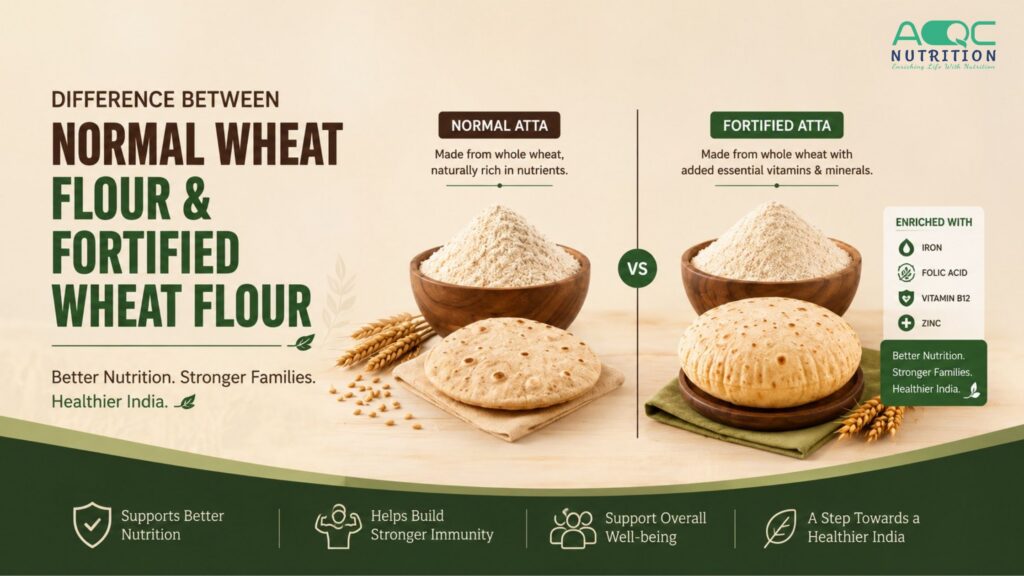
The White Paper identifies wheat flour fortification as a powerful strategy for reducing anemia. Wheat is a daily staple for more than 500 million Indians, especially in northern and central states. Since wheat is consumed regularly across households, fortifying flour with iron, folic acid, and vitamin B12 can deliver essential nutrients directly through everyday diets.
A key advantage discussed in the White Paper is that fortification requires no change in food habits. People continue eating the foods they are used to, while micronutrient intake naturally increases. This makes fortification a behaviour-neutral, population-wide solution that reaches both urban and rural communities.

Scientific Evidence Supporting Fortification
The White Paper brings together strong scientific evidence showing that wheat flour fortification effectively reduces iron deficiency. Research from multiple countries, along with Indian studies, demonstrates that fortified flour improves iron levels and decreases the prevalence of anaemia. The findings presented in the paper show that consistent consumption of fortified wheat flour can boost nutritional status among children, adolescents, and adults.
These results indicate that fortification is not only safe and feasible but also one of the fastest ways to improve micronutrient intake at scale. By supporting ongoing food-based strategies, fortified wheat flour can play a significant role in reducing the national anaemia burden.
Affordability and High Return on Investment
One of the strongest arguments in the White Paper is the cost-effectiveness of wheat flour fortification. Fortifying one kilogram of wheat flour costs only a few paise, making it an extremely affordable public health intervention. Despite its low cost, the potential health benefits are high.
The White Paper also highlights the economic impact of anemia, which contributes to reduced productivity and increased healthcare expenses. By improving iron intake through fortified flour, India can reduce these losses and strengthen human capital over time. The document notes that investing in fortification is financially efficient both for all the stakeholders, including government and public authorities.
Existing Systems That Support Scale-Up
A major strength identified in the White Paper is that India already has the infrastructure required to expand wheat flour fortification. Large-scale food distribution programmes like the Public Distribution System (PDS), Integrated Child Development Services (ICDS), and PM POSHAN reach hundreds of millions of people across the country. These programmes distribute wheat widely and can integrate centrally milled fortified flour with minimal structural changes.
In addition, several states have already tested or implemented wheat flour fortification. These pilots have shown that fortification is operationally feasible, acceptable to consumers, and effective in improving nutritional outcomes. The White Paper points out that more than a hundred flour mills in multiple states are already producing fortified flour, showing readiness for further expansion.
Policy Recommendations from the White Paper
To strengthen fortification efforts, the White Paper provides several practical recommendations. It suggests that wheat flour fortification should be made mandatory within major government food schemes to ensure consistent access for vulnerable groups. It also advises prioritising states with high anaemia rates and high wheat consumption for the first phase of implementation.
The White Paper calls for technical and financial support for small and medium flour mills so that they can adopt fortification technologies smoothly. Additionally, it highlights the importance of strong quality control systems to ensure that fortified flour meets required nutrient standards. Finally, the document recommends awareness campaigns to build trust and help people understand the benefits of fortified foods.
Conclusion
The Fortify Health White Paper presents a clear, research-backed case for wheat flour fortification as a scalable, cost-effective solution to India’s anaemia crisis. By integrating fortification into existing food distribution networks and strengthening monitoring systems, India can create a reliable pathway for delivering essential micronutrients to millions of people. With strong policy commitment and operational support, wheat flour fortification can significantly improve national nutrition outcomes and contribute to a healthier future for the country. To support high-quality, compliant, and efficient fortification processes, organisations can rely on AQC Chem for trusted micronutrient premixes and technical expertise.
For comprehensive insights, we encourage you to explore the information available in this resource: https://www.pdffiller.com/s/99_WMABb-.