Malnutrition continues to be one of India’s most persistent public health challenges. Despite remarkable economic growth and increased food production, millions of children and adults still suffer from deficiencies of essential vitamins and minerals — a problem often called hidden hunger.
Hidden hunger doesn’t always mean a lack of food — it means a lack of nutrition. A person may consume enough calories but still lack critical nutrients like iron, vitamin A, zinc, and folic acid that the body needs to grow, develop, and stay healthy.
The Scale of the Problem
According to the National Family Health Survey (NFHS-5) around 36% of Indian children under five years are stunted, and nearly 57% of women aged 15–49 are anemic These numbers highlight the urgent need for large-scale, sustainable nutritional solutions. Poor nutrition not only affects children’s physical and cognitive development but also impacts adult productivity and the nation’s economic growth.
How can Food Fortification provide a Simple, Scalable Solution?
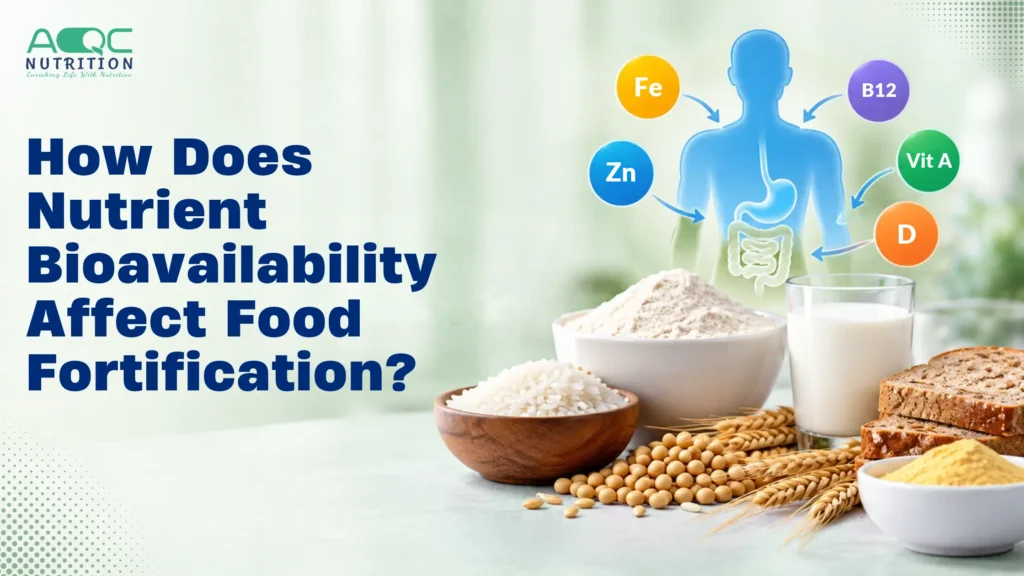
One of the most effective ways to address micronutrient deficiencies is through food fortification — the process of adding essential vitamins and minerals to everyday foods. Fortification improves the nutritional quality of staples like rice, wheat flour, milk, edible oil, and salt without changing their taste, texture, or cooking methods.
It is a safe, cost-effective, and sustainable solution that reaches large populations through commonly consumed foods. For example:
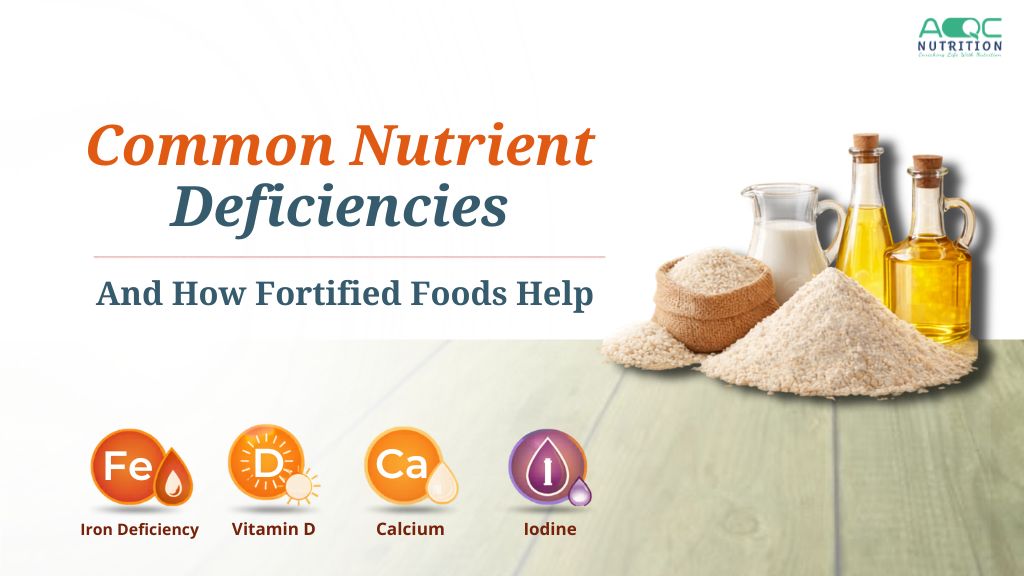
- Fortified rice helps fight anemia and iron deficiency.
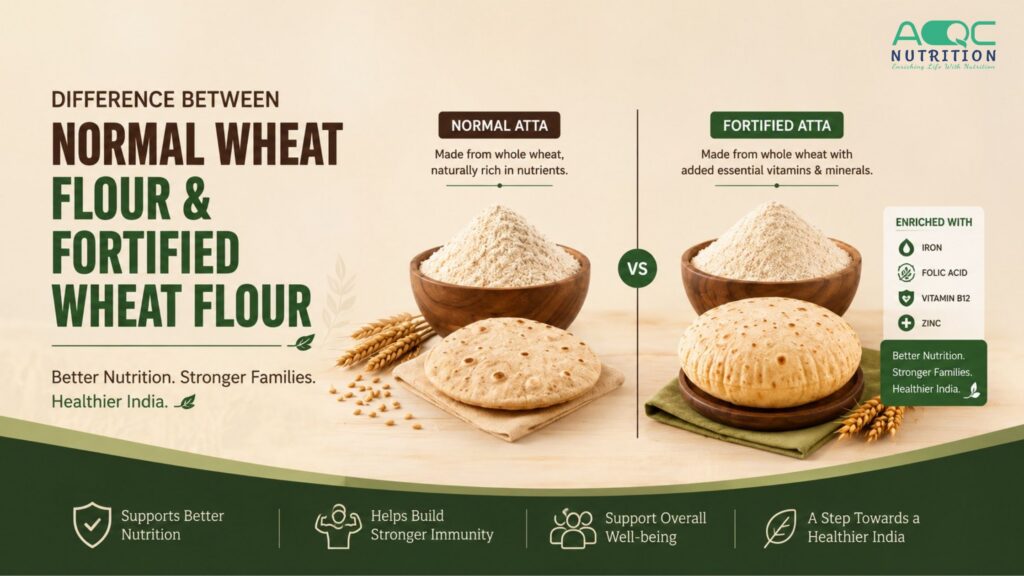
- Fortified wheat flour supports energy metabolism and boosts overall immunity by adding nutrients like iron, folic acid, and vitamin B12.
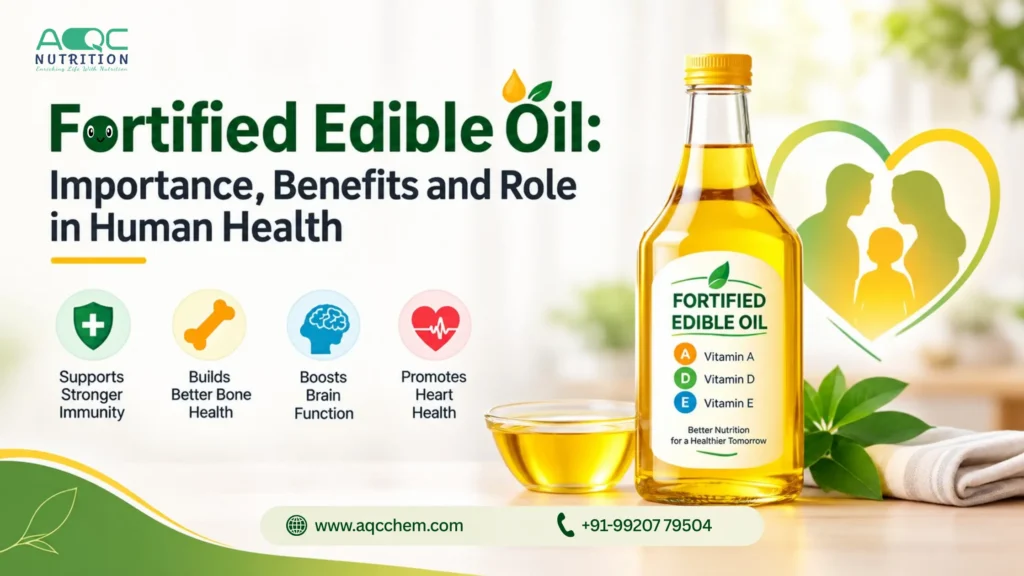
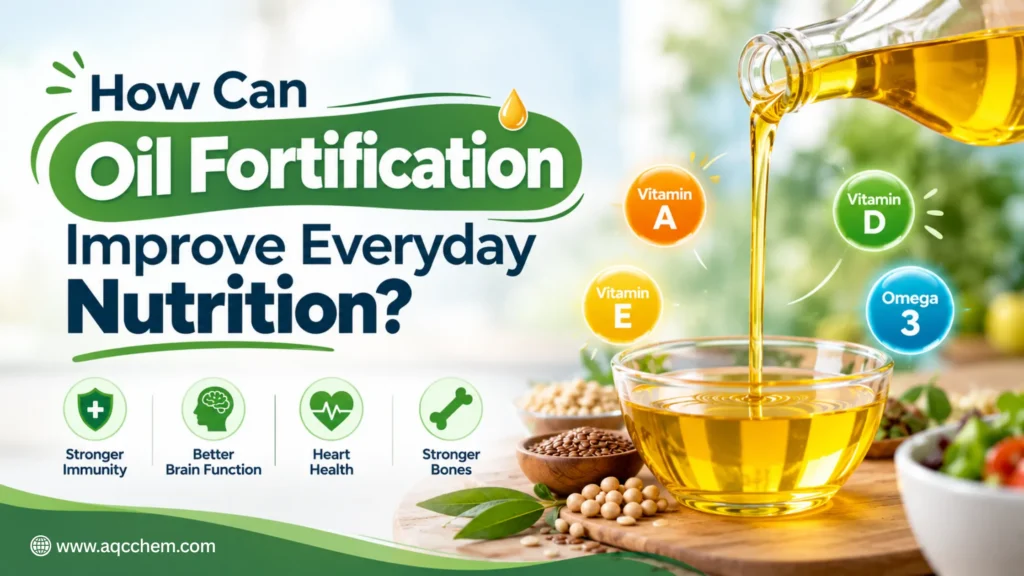
- Fortified milk and oil supply vitamin A and D.
- Fortified salt provides iodine and iron.
Which Government Initiatives are Driving Change?
The Government of India has taken several steps to promote food fortification as a national priority. Under schemes such as POSHAN Abhiyaan, Anaemia Mukt Bharat, and through the Food Fortification Resource Centre (FFRC) established by the Food Safety and Standards Authority of India (FSSAI), multiple programmes are working to make fortified foods accessible through the Public Distribution System (PDS), Mid-Day Meal Scheme(MDM), and the Integrated Child Development Services (ICDS).
Here are some key organisational details:
- POSHAN Abhiyaan is a flagship scheme led by the Ministry of Women and Child Development, launched 8 March 2018.
- Anaemia Mukt Bharat is implemented by the Ministry of Health and Family Welfare under the umbrella of the National Health Mission (NHM)
- The FFRC works under FSSAI to provide technical guidance, standards and monitoring for fortified food interventions.
These organisations and schemes, through multi-ministerial coordination and institutional mechanisms, strive to ensure that fortified staples reach broad populations and help reduce the burden of hidden hunger.
How is AQC Nutrition Partnering for a Healthier India?
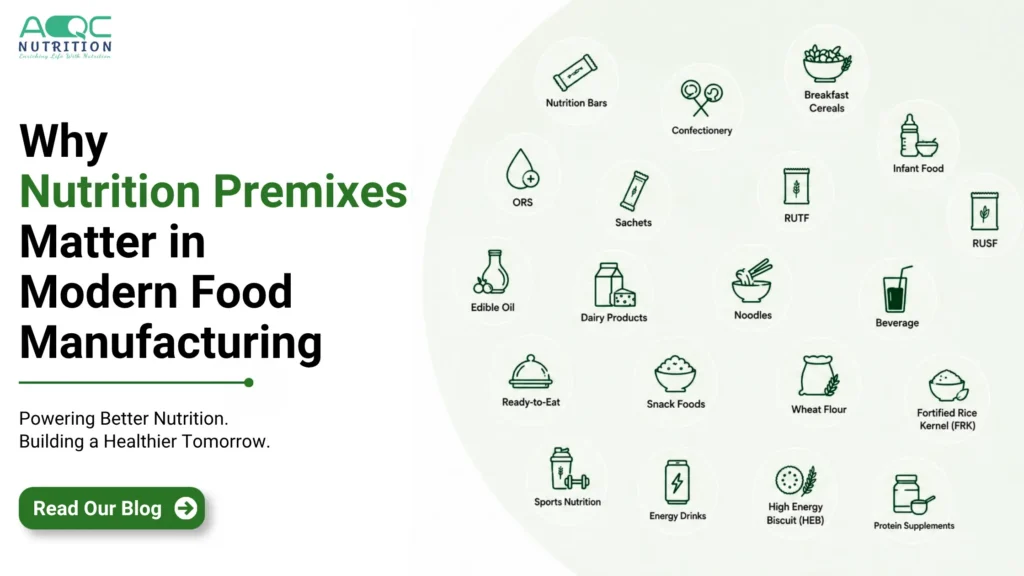
At AQC Nutrition, we are proud to support India’s nutrition mission by developing high-quality vitamin and mineral premixes for food fortification. Our scientifically formulated premixes meet global safety and quality standards and are designed to integrate seamlessly into a variety of food products.
From fortified wheat flour and edible oil to beverages and dairy applications, our solutions empower food manufacturers to deliver better nutrition to millions of consumers. We also work closely with partners and distributors to ensure that our products reach both domestic and international markets, strengthening the fight against malnutrition globally.
The Road Ahead
Fortification alone cannot solve all nutrition challenges — but it is a powerful tool when combined with dietary diversity, health education, and better access to food. As awareness grows, more food producers are adopting fortification as part of their responsibility toward public health.
AQC Nutrition remains committed to driving this positive change. By collaborating with industries, government programs, and global partners, we aim to make fortified foods a part of every Indian household.
Because true progress is not just measured by economic growth — it’s measured by the health and well-being of every citizen.
And fortification is helping India move one step closer to that healthier, stronger future.