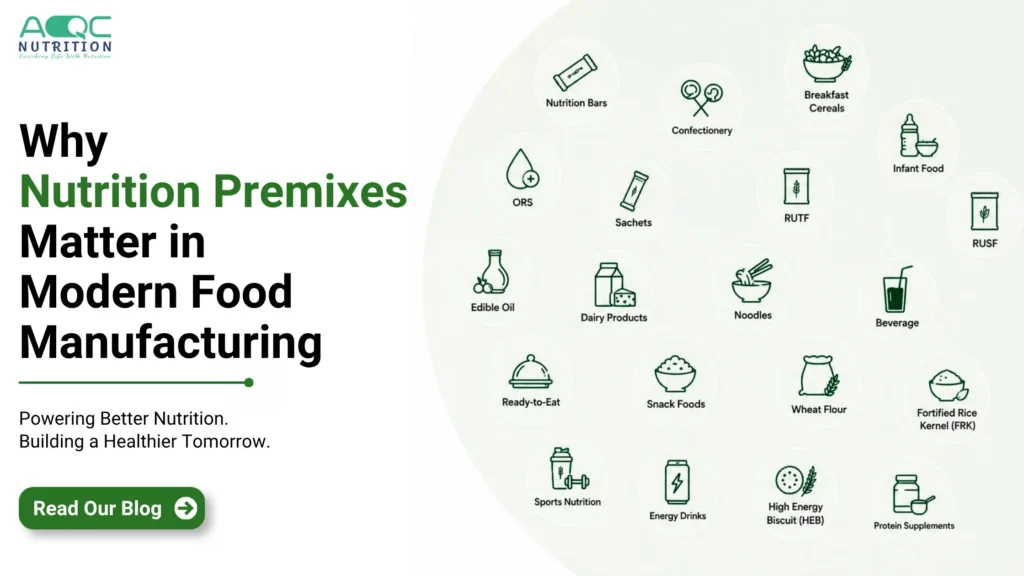
Food fortification is a practical way which enhances the nutritional value of everyday foods. By adding essential vitamins and minerals such as iron, folic acid, vitamin A, vitamin B12, zinc and vitamin D to products like wheat flour, rice, edible oil, milk and salt, manufacturers can help to reduce the micronutrient deficiencies without changing the people’s regular eating habits.
However, successful food fortification involves more than simply adding nutrients to a product. Manufacturers need to make sure that the right nutrients are added in the correct amounts, distributed evenly and remain stable during processing and storage.
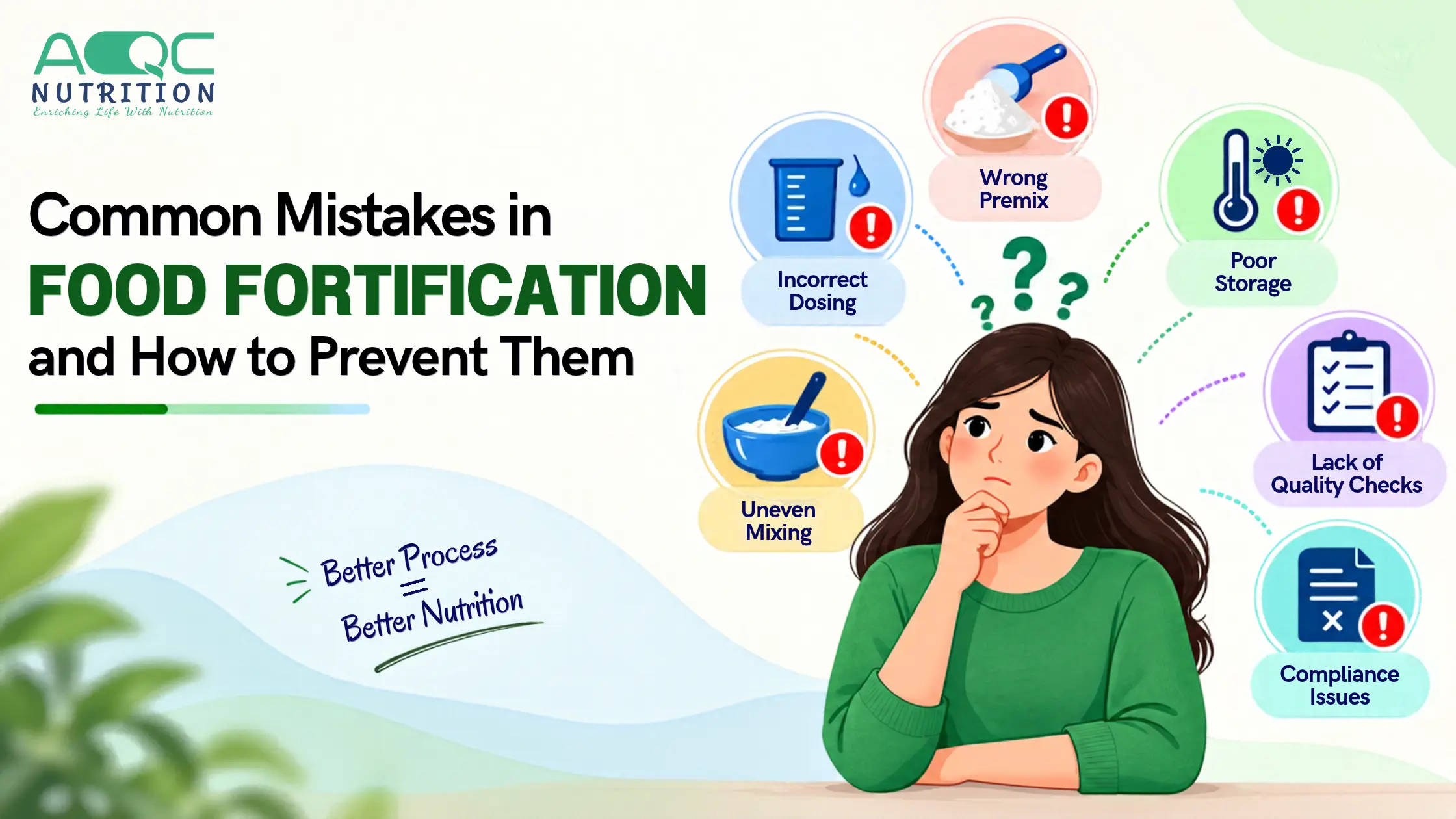
Even a small mistake at any stage can affect the final product. Common mistakes in food fortification, such as incorrect dosing, poor mixing or unsuitable storage conditions, can lead to nutrient losses, inconsistent quality and compliance issues.
So, how can manufacturers avoid these challenges and ensure consistent fortification? Let’s explore the common mistakes in food fortification and the practical steps to prevent them.
1. Using the Wrong or Poor-Quality Premix
A fortification premix contains the vitamins and minerals which are added to a food product. Its composition and quality directly influence the nutritional value and stability of the finished product.
Using an unsuitable premix can affect nutrient levels, taste, colour and shelf life. Some nutrient forms may also react with other ingredients, creating unwanted changes during processing or storage.
How to prevent it
Choose a reliable premix supplier and select a formulation suitable for your food product, processing conditions and target nutrient levels. Check the product specifications, shelf life, storage requirements and certificate of analysis before use.
2. Incorrect Premix Dosing
Accurate dosing is very important for achieving the intended nutrient levels. Under-dosing may cause the finished product to fall below the required standard, while excessive dosing can waste premix and result in nutrient levels exceeding permitted limits.
Common causes include calculation errors, incorrect machine settings, changes in production rates and variations in premix potency.
How to prevent it
Calculate the required premix dosage using its verified nutrient concentration, the target fortification level and expected processing losses. Match the premix feed rate with the actual production rate and calibrate dosing equipment regularly. Recheck calculations whenever the premix formulation or production process changes.
3. Uneven Mixing and Nutrient Distribution
Adding the correct quantity of premix does not guarantee successful fortification. If nutrients are not distributed evenly, different portions of the same batch may contain different nutrient concentrations.
This can happen due to insufficient mixing time, incorrect premix addition points, or equipment that is not suitable for the product or production capacity.
How to prevent it
Use suitable mixing equipment and determine the correct point for premix addition. Validate the mixing time and operating conditions before full-scale production. Collect representative samples from different parts of the batch to verify uniform nutrient distribution.
4. Choosing the Wrong Fortificant for the Food Product
Different food products have different compositions, processing requirements and storage conditions. A nutrient form suitable for wheat flour may not work as well in rice, milk or edible oil.
Certain nutrients can interact with fats, proteins and other food components, potentially affecting stability, taste, colour or absorption.
How to prevent it
Select the fortificant according to the food matrix, processing conditions, intended shelf life and applicable regulations. Conduct compatibility and formulation trials before introducing a new premix or fortification method into regular production.
5. Ignoring Nutrient Losses During Processing and Storage
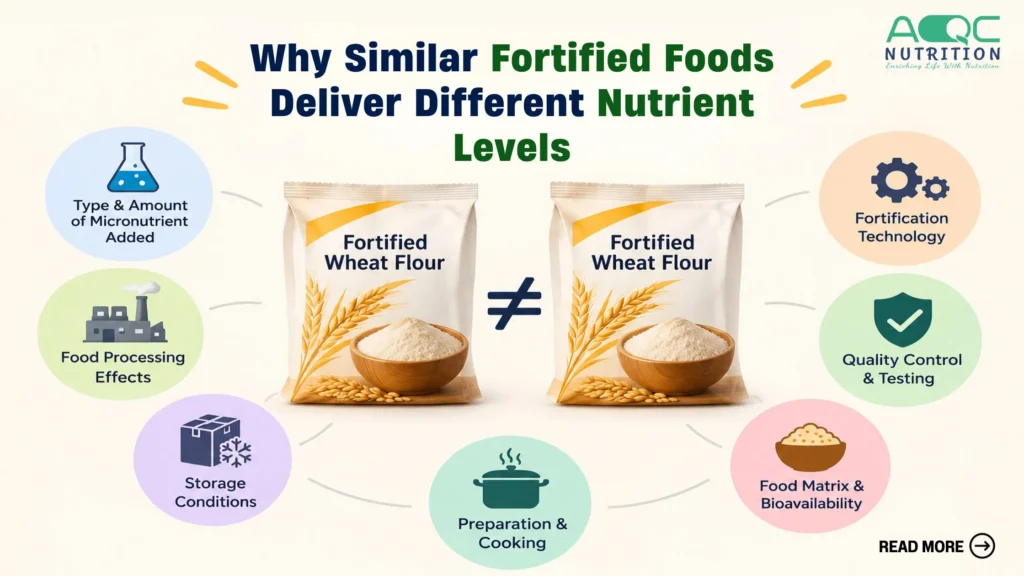
Some vitamins are sensitive to heat, light, moisture and oxygen. Processing conditions and prolonged storage can reduce the concentration of certain nutrients over time.
As a result, a product may meet its target nutrient level immediately after production but contain less than the intended amount later in its shelf life.
How to prevent it
Evaluate nutrient stability during processing and storage. Account for expected nutrient losses when establishing fortification targets while remaining within applicable regulatory limits. Where appropriate, use suitable stabilized or protected nutrient forms and conduct shelf-life studies to verify nutrient retention.
6. Improper Storage of Premix and Finished Products
Even a high-quality premix can deteriorate if stored incorrectly. Excessive heat, moisture and direct light can affect nutrient stability. Poor storage conditions may also cause handling and flow problems that affect dosing accuracy.
Fortified products may also lose nutrients if their packaging or storage conditions do not provide adequate protection.
How to prevent it
Follow the supplier’s storage recommendations and use packaging appropriate for the finished product. Protect materials from excessive heat, moisture and light wherever necessary. Maintain suitable warehouse conditions and follow first-in, first-out stock rotation.
7. Not Calibrating Dosing Equipment
Dosing equipment may not add the same amount of premix every time. Wear, blockages, maintenance issues and changes in material flow can affect its output.
Relying only on displayed machine settings without checking actual performance can result in inconsistent fortification.
How to prevent it
Regularly calibrate dosing equipment and verify the premix feed rate during production to maintain accurate and consistent nutrient levels. Inspect feeders regularly, maintain equipment according to the manufacturer’s recommendations and document calibration activities.
8. Insufficient Quality Control and Testing
Quality control plays an important role in ensuring consistent nutrient levels in fortified foods. Without regular monitoring and testing, variations in nutrient content may go unnoticed, affecting product quality and compliance with food safety standards.
How to prevent it
Establish a quality control plan covering raw material checks, dosing verification, representative sampling and finished-product testing. Use suitable rapid tests for routine monitoring and quantitative laboratory analysis to confirm nutrient concentrations. Review results over time to identify variations before they become larger problems.
9. Overlooking Packaging and Nutrient Interactions
Nutrients can interact with other ingredients in a food product, affecting stability, taste, colour and overall quality. Packaging plays an important role in protecting nutrients and maintaining their quality during storage.
Packaging that does not adequately protect against light, oxygen and moisture can reduce the stability of certain vitamins during storage.
How to prevent it
Check whether the premix is suitable for the food product and test the final product under appropriate storage conditions. Select packaging based on the product’s stability requirements. Conduct shelf-life testing when significant changes are made to the formulation, packaging or production process.
10. Inadequate Staff Training and Missing SOPs
A consistent fortification process depends on operators following the correct procedures. Without proper training and clear standard operating procedures (SOPs), employees may use incorrect settings, skip quality checks or handle premix improperly.
These variations can lead to differences between production batches and shifts.
How to prevent it
Develop clear SOPs covering premix handling, dosage calculations, equipment operation, mixing, sampling and corrective actions. Provide regular operator training so that staff follow the correct procedures and know how to respond when results fall outside the specified limits.
11. Poor Record Keeping and Traceability
Accurate records help manufacturers identify the source of a fortification problem. Without proper batch records, premix lot numbers and test results, it becomes difficult to trace the cause of inconsistencies in the fortification process.
Poor documentation can also make it harder to demonstrate compliance during inspections and audits.
How to prevent it
Maintain batch-wise records of premix quantities, supplier details, lot numbers, production volumes, dosing rates, calibration activities, laboratory results and corrective actions. Keep records organized and accessible so that problems can be traced and investigated efficiently.
12. Labeling Errors and Regulatory Non-Compliance
Food fortification must meet applicable requirements for nutrient levels and product labeling. Incorrect nutrition information or unsupported fortification claims can lead to regulatory issues and affect consumer trust.
Requirements may vary by food product and market, and regulations can change over time.
How to prevent it
Review product labels against the latest applicable regulations before printing or making changes. Ensure that nutritional declarations and fortification claims are supported by appropriate product data.
In India, manufacturers should consult the applicable Food Safety and Standards Authority of India (FSSAI) regulations, including requirements for fortified foods and the use of the +F logo where applicable.
How Can Manufacturers Improve Food Fortification?
Effective food fortification depends on proper control at every stage, from premix selection to final product testing.
- Choose the right premix: Select a suitable formulation based on the food product, processing conditions and target nutrient levels.
- Maintain dosing accuracy: Use appropriate dosing equipment, verify actual feed rates and calibrate the system regularly.
- Ensure uniform mixing: Validate mixing conditions and check nutrient distribution through representative sampling.
- Monitor Nutrient Stability: Check processing conditions, packaging and storage to help maintain nutrient levels throughout the product’s shelf life.
- Strengthen Quality Control: Conduct regular production checks and laboratory testing to ensure nutrient levels meet the required standards.
- Train staff and maintain records: Use clear SOPs, regular training and complete batch documentation to improve consistency and traceability.
- Stay updated on regulations: Review applicable nutrient standards, labeling rules and fortification requirements for the target market.
Best Practices Checklist to Prevent Mistakes in Food Fortification
Daily Production Checks
- Verify the premix feed rate against the target dosage.
- Check dosing equipment settings and operating conditions.
- Carry out appropriate routine quality checks.
- Record premix usage, production volumes and batch details.
Regular Equipment and Quality Reviews
- Verify dosing equipment calibration according to the quality plan.
- Review test results for variations in nutrient levels.
- Inspect premix storage conditions and stock rotation.
- Check mixing performance and investigate unusual results.
Periodic Quality Audits
- Arrange laboratory testing according to the product, risk assessment and regulatory requirements.
- Review SOPs and provide refresher training where needed.
- Verify labeling, batch records and traceability.
- Review nutrient stability when formulations, packaging or processing conditions change.
A well-defined checklist helps manufacturers detect issues early, maintain consistent product quality and ensure better control over the fortification process.
Conclusion
Successful food fortification requires more than adding nutrients to food. It involves selecting the right premix, maintaining accurate dosing, ensuring uniform mixing and monitoring nutrient stability through proper testing and storage.
By identifying and preventing common mistakes in food fortification, manufacturers can improve product consistency, reduce production losses and maintain the required nutrient levels throughout the product’s shelf life.
At AQC Nutrition, we support food manufacturers with custom micronutrient premixes, food fortification advisory, contract manufacturing and precision laboratory equipment for quality testing.
Looking to fortify wheat flour, rice, edible oil, milk, biscuit, salt or etc and improve consistency in your existing process? Contact our team to discuss a suitable solution for your product.