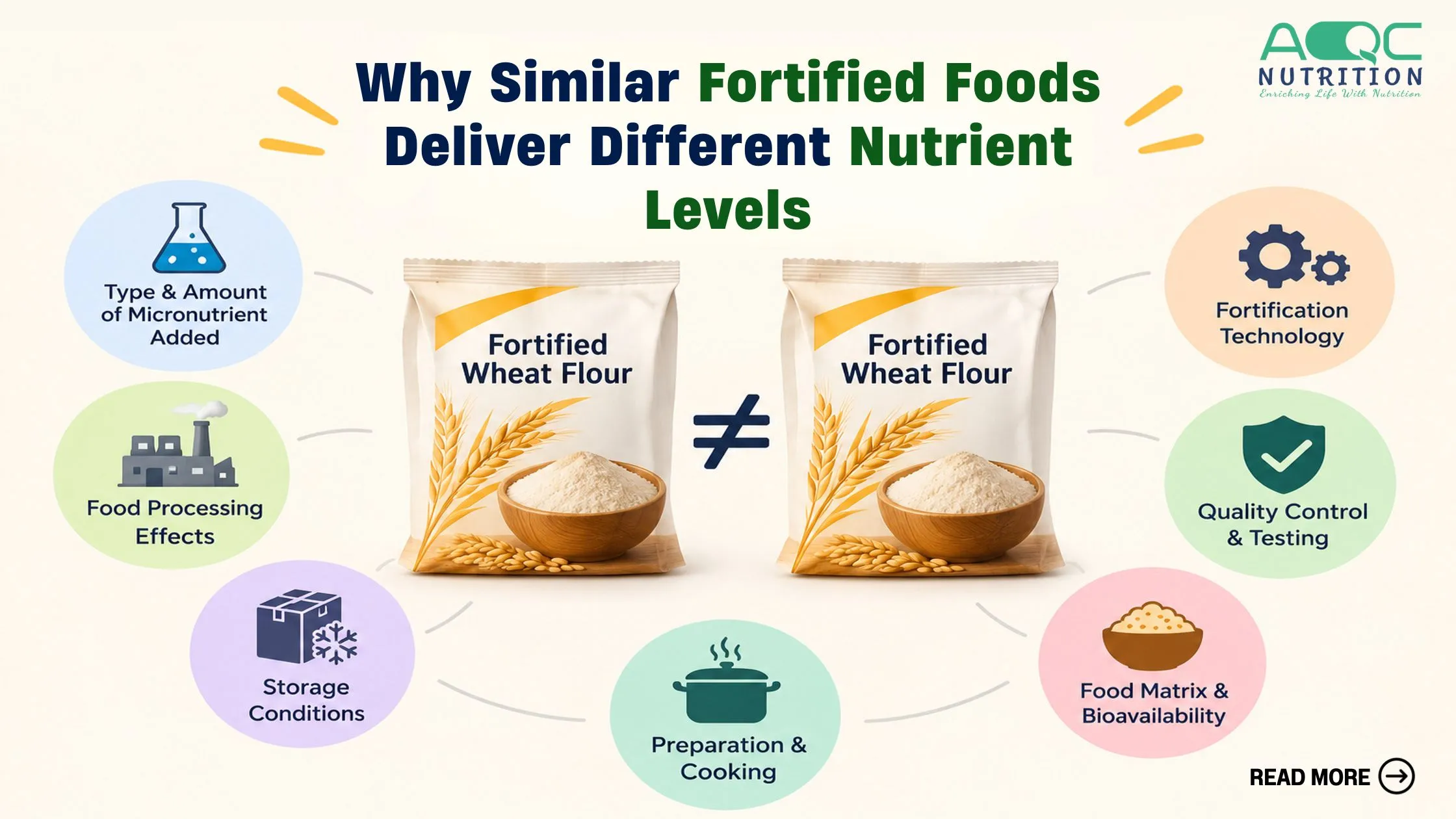
Food fortification is an important way to improve the nutritional value of commonly consumed foods. By adding essential vitamins and minerals, manufacturers can help address micronutrient deficiencies and improve access to important nutrients through everyday foods. However, two fortified foods that look the same may not always deliver the same amount of nutrients to the body.
Several factors can affect how much of a vitamin or mineral is retained in a food, how much is consumed, and how much the body can absorb. Understanding these factors is important for food manufacturers when developing effective fortified food products.
Let’s take a closer look at the key factors that influence nutrient levels in fortified foods and understand why two similar products may deliver different nutritional results.
1. The Type and Amount of Micronutrient Added
The first factor is the form and quantity of the micronutrient used during food fortification. Different forms of vitamins and minerals can behave differently in food products and in the human body.
For example, iron can be added in different forms, while vitamins may also be available in different forms with varying stability. The selected fortificant should be suitable for the food product, processing conditions, and intended nutritional purpose.
The amount added also matters. A product may be fortified with a specific level of a nutrient, but the final amount available to consumers can change due to processing, storage, or preparation.
2. Food Processing Can Affect Nutrient Levels
Processing is another important factor that can influence micronutrient content. Heat, moisture, light, oxygen, and other processing conditions may affect the stability of certain vitamins and minerals.
For example, some vitamins are more sensitive to heat or light than others. If a fortified food goes through high-temperature processing, a portion of the added vitamin may be lost.
This is why manufacturers need to consider nutrient stability when selecting a fortificant and designing a food processing method. The goal is not simply to add nutrients, but to maintain the required nutrient levels throughout production and storage.
3. Storage Conditions Matter
Even after production, micronutrient levels can change during storage. Exposure to heat, humidity, oxygen, and light can affect the stability of certain nutrients.
Packaging therefore plays an important role in maintaining the nutritional quality of fortified foods. Two products may start with similar nutrient levels but show different results after storage because their packaging materials and storage conditions are different.
Proper storage and suitable packaging can help protect sensitive vitamins and maintain fortified food quality for longer.
4. The Food Matrix Can Change Nutrient Absorption
The food matrix refers to the physical and chemical structure of a food and how its different components interact with each other. This can influence how nutrients are released and absorbed by the body.
For example, certain compounds naturally present in foods may reduce the absorption of some minerals. On the other hand, some food components can support better nutrient absorption.
This means that the same amount of a micronutrient added to two different foods may not necessarily result in the same bioavailability.
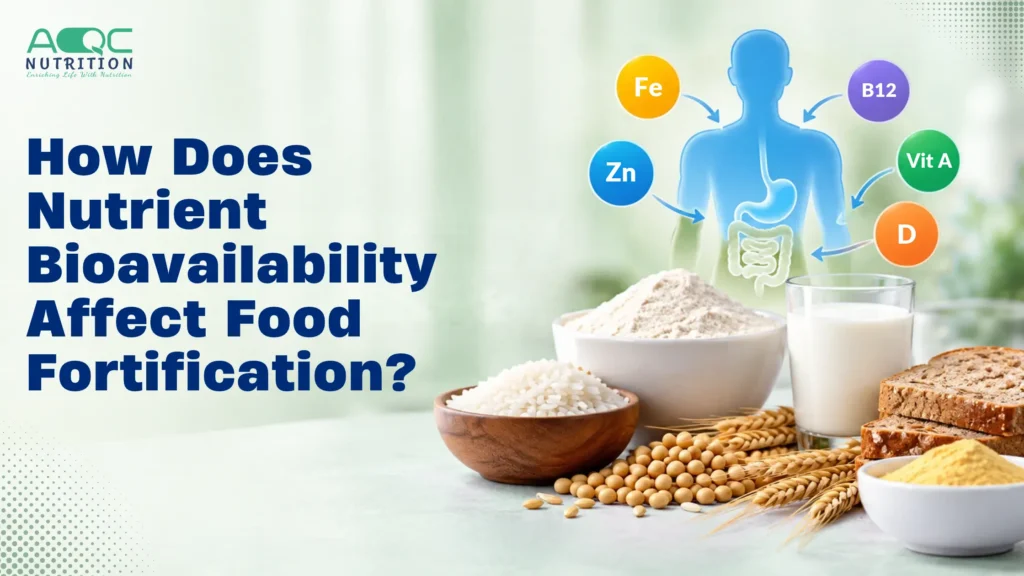
Bioavailability refers to the amount of a nutrient that is available for the body to absorb and use. It is therefore an important consideration in effective micronutrient fortification.
If you want to know more about bioavailability, read our blog: www.aqcchem.com/how-does-nutrient-bioavailability-affect-food-fortification
5. Preparation and Cooking Can Cause Changes
What happens to a fortified food after it leaves the manufacturing facility also matters. Cooking, boiling, baking, or other preparation methods can affect nutrient levels.
Water-soluble vitamins, for instance, may be affected by cooking methods involving water or high temperatures. Some nutrients may also be lost during preparation depending on the type of food and cooking process.
As a result, the nutrient level stated at the manufacturing stage may not always be identical to the amount ultimately consumed.
6. Fortification Technology Makes a Difference
Modern food fortification technology helps manufacturers achieve more consistent nutrient distribution. The fortificant needs to be mixed properly so that the nutrients are distributed evenly throughout the food product.
Poor mixing can result in uneven nutrient distribution, meaning some portions may contain more nutrients while others contain less.
Technologies such as micronutrient premixes can help manufacturers add selected vitamins and minerals in controlled quantities. Proper dosing, blending, and quality control are essential for producing consistent fortified foods.
7. Quality Control and Testing Are Essential
Regular testing helps manufacturers understand whether the final product meets its intended nutritional specifications. Quality control can include checking the level of vitamins and minerals during different stages of production.
Testing can also help identify nutrient losses caused by processing or storage. This allows manufacturers to make adjustments to the fortification process when necessary.
For products such as fortified wheat flour, rice, edible oils, milk, and other staple foods, consistent quality control is particularly important because these products may be consumed regularly.
Conclusion
Two fortified foods can contain the same micronutrient but still deliver different nutritional outcomes. The type and quantity of fortificant, processing conditions, storage, food matrix, preparation methods, nutrient bioavailability, and fortification technology can all influence the final result.
For food manufacturers, effective micronutrient fortification is therefore about more than simply adding vitamins and minerals. It requires the right fortificant, accurate dosing, proper mixing, suitable processing, protective packaging, and regular quality testing.
When these factors are carefully managed, fortified foods can provide more consistent nutrient levels and support efforts to reduce micronutrient deficiencies through everyday diets.
Looking for the Right Micronutrient Premix?
AQC Chem offers customized micronutrient premix solutions to support consistent and effective food fortification. Contact us to discuss your requirements.
Website: www.aqcchem.com
Phone Number: +91 9920779504