Wheat flour is one of the most important and widely consumed staple food products worldwide and serves as a primary ingredient in products such as bread, chapati, noodles, biscuits, and a wide range of bakery items. Since it is taken regularly by a large portion of the population, wheat flour provides an effective way to deliver essential vitamins and minerals via food fortification. By adding carefully selected nutrients, manufacturers can enhance the nutritional value of flour and help address common nutrient deficiencies.
As awareness of nutrition continues to grow, wheat flour fortification has become one of the most effective forms of food fortification worldwide. Micronutrient deficiencies still affect millions of people, impacting energy levels, immunity, growth, and overall well-being. To address these challenges, governments, health organizations, and flour manufacturers are increasingly adopting fortification programs.
Understanding the top nutrients added in fortified wheat flour and their benefits helps highlight the role of fortified foods in improving public health and supporting better nutrition.
Understanding Wheat Flour Fortification
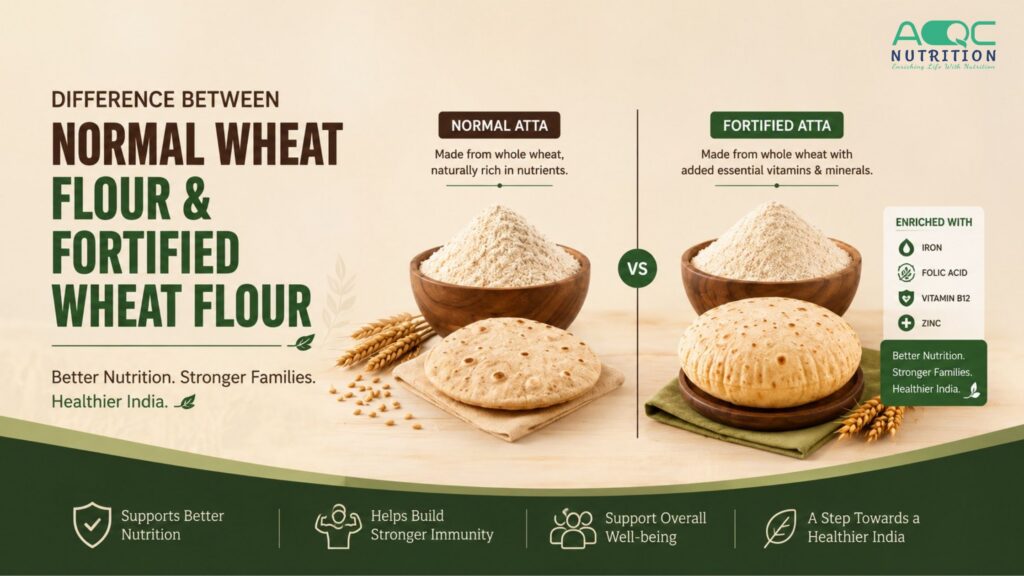
Wheat flour fortification is the process of adding essential vitamins and minerals to flour during production to improve its nutritional profile. These nutrients are added in carefully controlled amounts to help address nutritional gaps and support better health outcomes.
The wheat flour fortification process is widely used because flour is a staple food consumed across different age groups and regions. Fortification allows manufacturers to improve the nutritional quality of flour without significantly changing its taste, texture, or appearance.
Difference Between Fortified and Enriched Flour
Although the terms are often used interchangeably, fortified flour and enriched flour have different purposes.
| Feature | Fortified Wheat Flour | Enriched Wheat Flour |
|---|---|---|
| Definition | Flour with additional vitamins and minerals added to improve nutritional value | Flour in which nutrients lost during milling are added back |
| Purpose | To address nutrient deficiencies and improve public health | To restore nutrients removed during processing |
| Nutrient Levels | Can exceed original natural levels | Typically restored to original levels |
| Common Nutrients Added | Iron, folic acid, vitamin B12, zinc, vitamin D, and B vitamins | Iron, thiamine, riboflavin, niacin, and folic acid |
| Health Objective | Improves nutritional quality and supports public health initiatives | Maintains the nutritional quality of refined flour |
| Nutritional Value | Enhanced nutritional profile | Restored nutritional profile |
In simple terms, enrichment replaces nutrients lost during processing, while fortification adds nutrients to improve the overall nutritional value of flour.
How Wheat Flour Is Fortified During Processing
The fortification process generally includes the following steps:
- Flour Milling: Wheat grains are cleaned, conditioned, and milled into flour. During this stage, some naturally occurring nutrients may be reduced or removed.
- Nutrient Premix Addition: A carefully formulated flour fortification premix containing essential vitamins and minerals is added using precision dosing systems.
- Blending and Mixing: The flour and premix are blended thoroughly to ensure uniform nutrient distribution throughout the batch.
- Quality Control: Regular testing is performed to verify nutrient levels, mixing consistency, and compliance with fortification requirements.
- Packaging and Storage: The fortified flour is packaged and stored under appropriate conditions to maintain nutrient stability and product quality.
Why Nutrient Fortification Is Important
Nutrient fortification is an effective strategy for improving public health and addressing nutritional deficiencies across populations. In this section, we explore the most common micronutrient deficiencies found worldwide, their impact on human health, and how fortified wheat flour helps bridge nutritional gaps. Understanding these aspects highlights why flour fortification has become an important tool for improving nutrition and supporting better health outcomes.
Common Micronutrient Deficiencies Worldwide
Micronutrient deficiencies remain a major public health concern worldwide. Even individuals who consume adequate calories may not receive sufficient vitamins and minerals.
Common deficiencies include:
- Iron deficiency
- Folic acid deficiency
- Vitamin B12 deficiency
- Zinc deficiency
- Vitamin D deficiency
These deficiencies can result from poor dietary diversity, limited nutrient intake, food insecurity, or nutrient losses during food processing.
The Impact of Nutrient Deficiencies on Health
Micronutrients are essential for maintaining normal body functions. Inadequate intake can contribute to several health challenges, including:
- Fatigue and weakness
- Reduced cognitive performance
- Weakened immune function
- Delayed growth and development
- Increased risk of anemia
- Pregnancy-related complications
Addressing these deficiencies is essential for improving quality of life and overall health outcomes.
How Fortified Flour Helps Address Nutritional Gaps
Through micronutrient fortification, manufacturers can deliver essential nutrients through a commonly consumed food product.
Key benefits include:
- Broad population reach
- Consistent nutrient delivery
- Cost-effective nutrition intervention
- Support for national nutrition programs
- Improved public health outcomes
As a result, wheat flour fortification has become an important tool in reducing nutrient deficiencies and improving nutrition on a large scale.
Top Nutrients Added in Fortified Wheat Flour
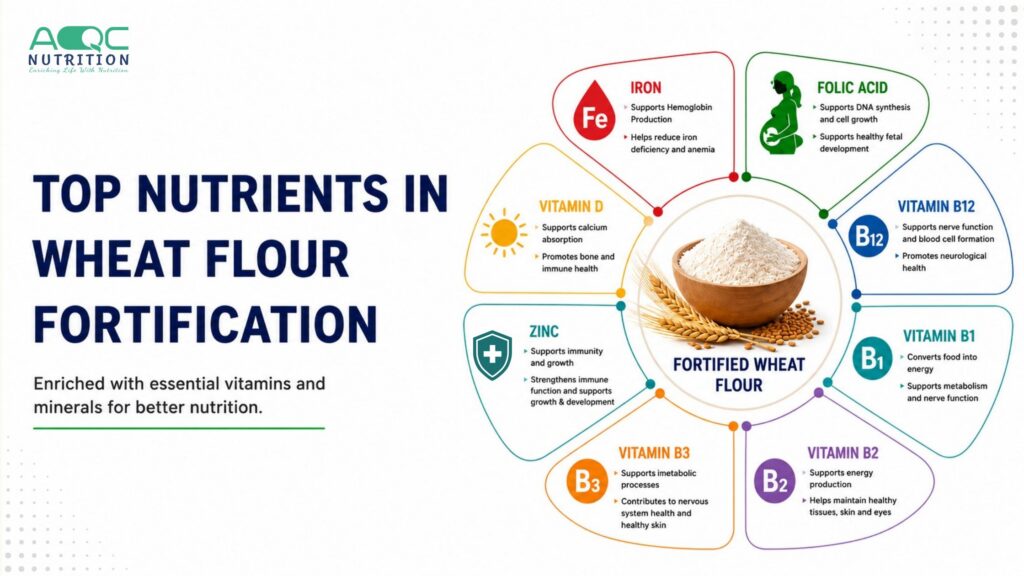
Several vitamins and minerals are commonly included in fortified flour to enhance its nutritional profile and support better health outcomes.
| Nutrient | Primary Function | Key Health Benefits |
|---|---|---|
| Iron | Supports hemoglobin production | Helps reduce iron deficiency and anemia |
| Folic Acid | Supports DNA synthesis and cell growth | Supports healthy fetal development |
| Vitamin B12 | Supports nerve function and blood cell formation | Promotes neurological health |
| Vitamin B1 (Thiamine) | Converts food into energy | Supports metabolism and nerve function |
| Vitamin B2 (Riboflavin) | Supports energy production | Helps maintain healthy tissues |
| Vitamin B3 (Niacin) | Supports metabolic processes | Contributes to nervous system health |
| Zinc | Supports immunity and growth | Strengthens immune function |
| Vitamin D | Supports calcium absorption | Promotes bone and immune health |
Each nutrient added during the flour fortification process serves a specific nutritional purpose. Together, these vitamins and minerals help improve the overall nutritional quality of wheat flour and support better public health outcomes.
1. Iron
Iron is one of the most commonly added nutrients in wheat flour because iron deficiency remains one of the most widespread nutritional concerns worldwide. It is essential for producing hemoglobin, the protein that carries oxygen throughout the body.
Why it matters:
• Supports healthy red blood cell formation
• Helps reduce the risk of iron deficiency and anemia
• Improves oxygen transport throughout the body
• Supports energy production and physical performance
2. Folic Acid
Folic acid is a B vitamin that plays a key role in DNA synthesis, cell growth, and tissue development. It is particularly important during pregnancy, making it one of the most valuable nutrients included in wheat flour fortification programs.
Health benefits:
- Supports healthy fetal development
- Promotes normal cell division
- Supports DNA synthesis
- Helps reduce the risk of neural tube defects
3. Vitamin B12
Vitamin B12 supports the normal functioning of the nervous system and helps produce healthy red blood cells. It also contributes to energy metabolism and cognitive health.
Primary benefits:
- Maintains nerve function
- Supports red blood cell production
- Helps improve energy metabolism
- Supports brain and cognitive health
4. Vitamin B1 (Thiamine)
Vitamin B1 helps the body convert carbohydrates into energy and supports the proper functioning of the nervous system. It is an important nutrient for maintaining normal metabolic activity.
Key benefits of vitamin B1 include:
- Supports energy production
- Helps metabolize carbohydrates
- Supports nervous system function
- Contributes to overall metabolic health
5. Vitamin B2 (Riboflavin)
Riboflavin is involved in energy production and helps the body utilize other nutrients effectively. It also supports healthy tissues and cellular function.
Key benefits of vitamin B2 include:
- Supports energy metabolism
- Helps maintain healthy skin and eyes
- Supports cellular growth and repair
- Assists nutrient utilization
6. Vitamin B3 (Niacin)
Niacin is another important B vitamin commonly included in food fortification programs. It helps convert food into usable energy and supports various metabolic processes.
Key benefits of vitamin B3 include:
- Supports energy metabolism
- Contributes to nervous system health
- Supports healthy skin function
- Assists normal cellular processes
7. Zinc
Zinc is an essential mineral involved in numerous biological functions, including immune support, growth, and development. It is often included in fortification premixes to improve overall nutritional quality.
Key benefits of zinc include:
- Supports immune function
- Promotes healthy growth and development
- Supports wound healing
- Contributes to enzyme activity
8. Vitamin D
Vitamin D plays a crucial role in calcium absorption and bone health. It also supports immune function and muscle health.
Key benefits of vitamin D include:
- Supports healthy bones and teeth
- Improves calcium absorption
- Supports muscle function
- Contributes to immune health
Why These Nutrients Are Added to Wheat Flour
The nutrients added during wheat flour fortification are selected based on common nutritional deficiencies and public health needs. By incorporating essential vitamins and minerals into a staple food product, fortified wheat flour helps improve nutrient intake, supports better health outcomes, and contributes to national nutrition improvement programs.
Health Benefits of Nutrient-Fortified Wheat Flour
The growing popularity of fortified foods highlights the importance of fortified wheat flour benefits, particularly in supporting nutrition and public health.
- Supports Healthy Blood Formation: Iron, folic acid, and vitamin B12 work together to support the formation of healthy red blood cells and maintain normal oxygen transport throughout the body.
- Helps Reduce Iron Deficiency and Anemia: One of the primary goals of food fortification is to reduce iron deficiency. Iron-fortified flour helps improve iron intake and supports anemia prevention efforts.
- Promotes Better Energy Metabolism: Vitamins B such as thiamine, riboflavin, niacin, and vitamin B12 help the body convert food into energy and support normal metabolic functions.
- Supports Brain and Nervous System Function: Several nutrients used in flour fortification contribute to cognitive health, nervous system function, and neurological development.
- Strengthens Immunity: Nutrients such as zinc and vitamin D play important roles in supporting the body’s natural defense mechanisms and maintaining overall wellness.
- Supports Maternal and Child Health: Folic acid is particularly important for pregnant women because it supports fetal development and helps reduce the risk of certain birth defects.
The Role of Nutrient Premixes in Flour Fortification
Nutrient premixes play a critical role in the flour fortification process by providing a reliable and efficient way to add essential vitamins and minerals. They help manufacturers achieve accurate nutrient levels, ensure uniform distribution throughout the flour, and maintain compliance with fortification standards. Understanding how fortification premixes work highlights their importance in delivering consistent product quality and maximizing the nutritional benefits of fortified flour.
What Are Fortification Premixes?
Fortification premixes are specially formulated blends of vitamins and minerals used to fortify food products. These premixes simplify nutrient addition and help ensure accurate fortification.
How Premixes Ensure Accurate Nutrient Addition
Premixes are manufactured according to precise formulations, allowing flour producers to add nutrients consistently and accurately during production. High-quality nutrient premixes for flour fortification help manufacturers achieve accurate nutrient levels, improve production efficiency, and maintain compliance with fortification standards.
Companies such as AQC Chem support food manufacturers by providing scientifically formulated fortification premixes that help ensure consistent nutrient delivery and product quality across production batches.
Importance of Consistent Nutrient Distribution
Proper nutrient distribution ensures that every batch of fortified flour delivers the desired nutritional benefits. Effective mixing systems and quality control procedures are essential for maintaining consistency.
Recommended Fortification Standards and Guidelines
The effectiveness of any fortification program depends on adherence to recognized standards and guidelines. These requirements help ensure that fortified flour delivers the intended nutritional benefits while maintaining safety and quality.
1. FSSAI Fortification Standards
In India, wheat flour fortification is led by the Food Safety and Standards Authority of India (FSSAI). The organization provides recommendations for nutrient addition to support public health and improve nutrition.
Nutrients commonly included under FSSAI fortification guidelines include:
- Iron
- Folic Acid
- Vitamin B12
These nutrients are added in specific quantities to help address common micronutrient deficiencies and support national nutrition initiatives.
2. Global Fortification Recommendations
International organizations such as the World Health Organization (WHO) recognize flour fortification as an effective public health scheme.
Global recommendations often focus on:
- Iron fortification to reduce anemia
- Folic acid fortification to support maternal health
- Vitamin B12 fortification where deficiencies are common
- Zinc fortification to support growth and immunity
Many countries have adopted national flour fortification programs based on these recommendations.
3. Quality and Compliance Considerations
To meet flour fortification standards, manufacturers should focus on:
- Accurate nutrient dosing
- Consistent nutrient distribution
- Use of quality nutrient premixes
- Routine laboratory testing
- Proper storage conditions
- Regulatory compliance
Regular monitoring helps secure product consistency and nutritional effectiveness.
Common Challenges in Wheat Flour Fortification
Wheat flour fortification is beneficial, but it also involves some challenges that need proper management to ensure consistent quality and nutrition.
- Maintaining Nutrient Stability: Certain vitamins may be sensitive to heat, light, moisture, and storage conditions. Maintaining nutrient stability throughout shelf life is a key challenge.
- Uniform Nutrient Distribution: Achieving even nutrient distribution requires right blending equipment and well-designed production processes.
- Storage and Shelf-Life Concerns: Environmental conditions can affect nutrient retention. Suitable packaging and storage practices help preserve nutrient quality.
- Quality Control and Testing Requirements: Regular testing is necessary to verify nutrient levels, ensure compliance, and maintain product consistency.
How to Choose the Right Fortification Premix
Selecting the right flour fortification premix is critical for achieving successful fortification outcomes.
- Nutrient Requirements: The premix should contain nutrients that align with regulatory guidelines and nutritional objectives.
- Regulatory Compliance: Manufacturers should ensure that premixes meet applicable food safety and fortification regulations.
- Product Quality and Stability: High-quality premixes help maintain nutrient stability during processing and storage.
- Supplier Reliability: Choosing a trusted supplier helps ensure consistent product quality, technical support, and regulatory compliance.
Why Quality Fortification Premixes Matter for Flour Manufacturers
Choosing the right fortification premix is important for flour manufacturers, as it directly affects product quality, nutritional value, and regulatory compliance.
- Consistent Product Quality: Quality premixes help maintain accurate nutrient levels and consistent product performance.
- Regulatory Compliance: Reliable premixes support compliance with food safety requirements and fortification standards.
- Improved Nutritional Value: Well-formulated premixes ensure that fortified flour delivers the intended nutritional benefits.
- Consumer Trust and Brand Reputation: For flour manufacturers, selecting a reliable flour fortification premix supplier is essential for maintaining product consistency, meeting regulatory requirements, and supporting consumer confidence.
Conclusion
Fortified wheat flour has become an important component of modern nutrition strategies. As it helps address common micronutrient deficiencies through a widely consumed food product. By adding essential nutrients such as iron, folic acid, vitamin B12, zinc, and vitamin D, manufacturers can significantly improve the nutritional value of flour while supporting public health goals.
As the demand for healthier food products continues to grow, wheat flour fortification, quality nutrient premixes for flour fortification, and adherence to established flour fortification standards will remain essential for delivering safe, effective, and nutritionally enhanced flour products that benefit consumers worldwide.
Turn Every Bag of Flour into Better Nutrition
The right nutrient premix makes all the difference. AQC Chem provides customized wheat flour fortification premixes that help manufacturers achieve consistent quality, nutritional accuracy, and regulatory compliance.
Visit our website: www.aqcchem.com
Phone Number: +91-99207 79504
Email: shiyvamgupta@aqcchem.com